
Summary
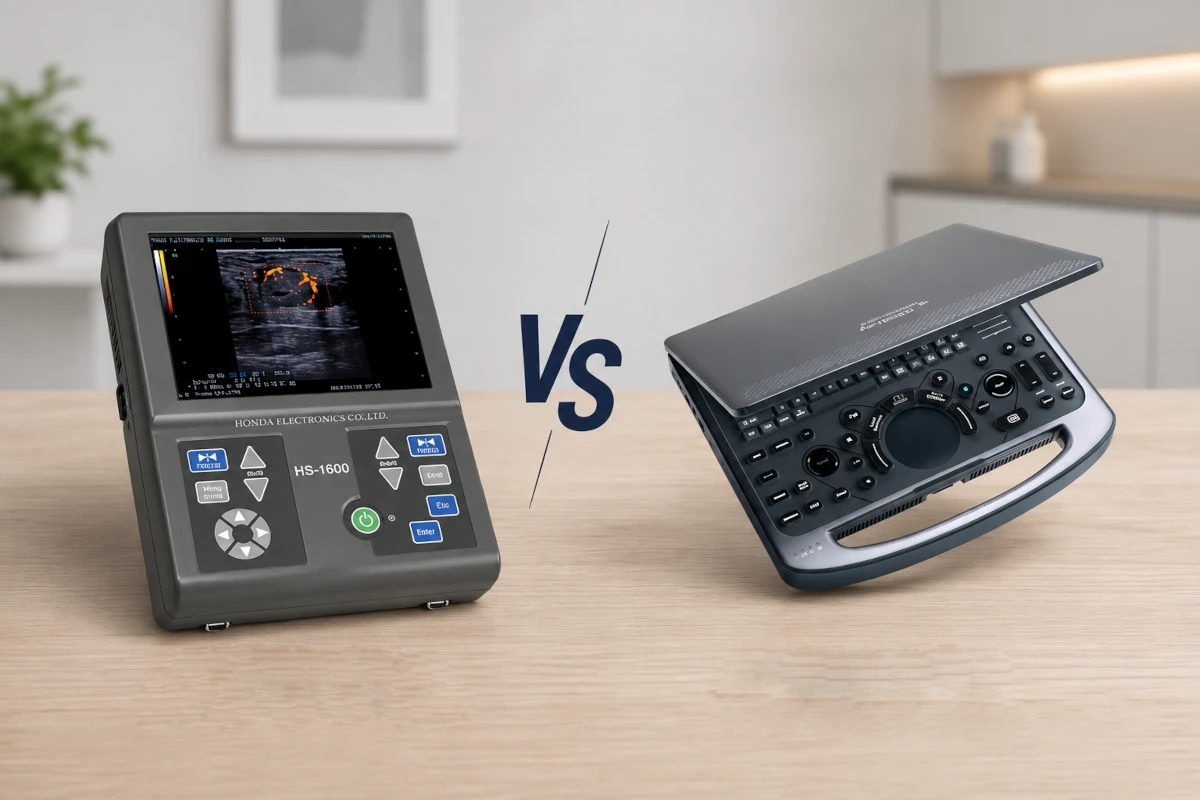
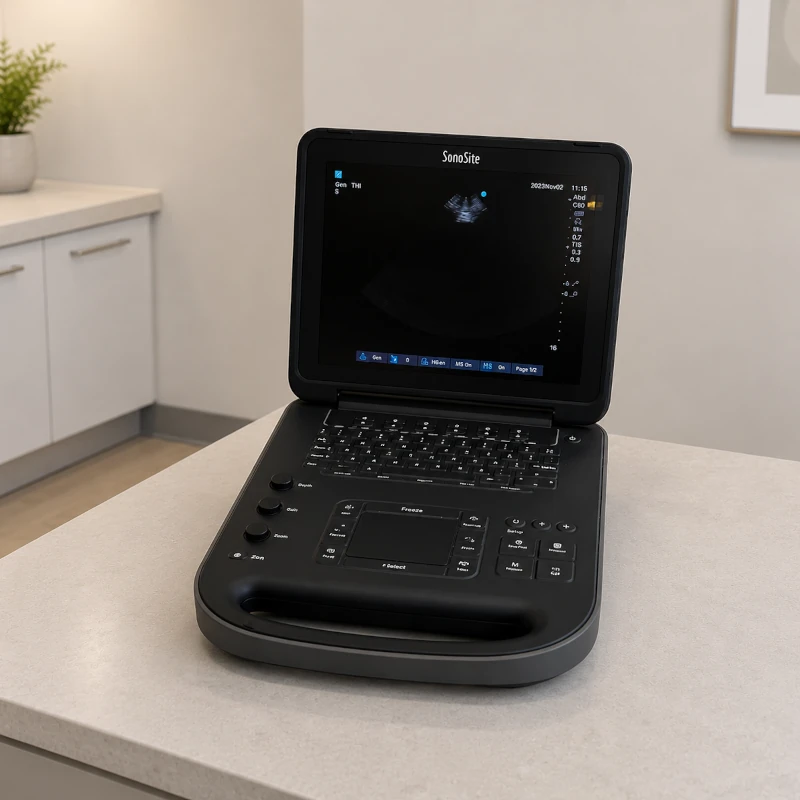
Used ultrasound machines can offer significant cost savings for clinics, hospitals, and veterinary practices, but buyers need to look beyond price. A gently used machine may provide access to advanced technology at a fraction of the cost of new equipment, and it can also help buyers avoid long manufacturing wait times. However, not every used system is equal. To get a reliable scanner, buyers need to pay close attention to the machine’s overall condition, probe quality, installed software, service history, and the availability of after-sale support.
Introduction
Ultrasound machines are widely used in both human and veterinary medicine because they provide real-time imaging without ionizing radiation and rely on key ultrasound machine parts that support use in clinics, emergency rooms, farms, and mobile settings. A new ultrasound system can be expensive, which is why used portable ultrasound machines are often so appealing. The key, though, is to remember that used machines are not all the same. Two systems of the same model can vary greatly depending on age, maintenance, and installed features. This guide explains why buyers consider used ultrasound, the difference between used and refurbished equipment, and what to check before making a purchase.
Why Buy a Used Ultrasound Machine?
Cost savings and quick availability
The most obvious reason to consider used ultrasound equipment is price. A pre-owned scanner typically costs much less than a new system, which helps facilities stretch tight budgets. That lower upfront cost can also make it possible for smaller clinics and start-ups to invest in better imaging without taking on large debts. Another advantage is speed. Used machines are often available right away, so buyers can avoid the long lead times that sometimes come with ordering new equipment.
Proven reliability and access to advanced features
Many used systems remain dependable because they have already proven themselves in real-world clinical environments. Buying a slightly older model can also provide access to advanced features, such as improved Doppler modes or specialized presets, at a more manageable price, especially when the machine comes from a reputable vendor. Since a large portion of an ultrasound machine’s depreciation happens early in its life, a used system may also hold its resale value more steadily going forward.
Environmental benefits and sustainability
Choosing used equipment can also reduce environmental impact. Keeping a working machine in service lowers demand for new manufacturing and helps prevent functional systems from ending up in landfills. For facilities that care about sustainability, extending the life of existing equipment can be a practical way to conserve resources while still delivering quality care.
Used vs Refurbished Ultrasound Machines
A used machine is typically sold in its current condition by a previous owner. That condition may be excellent, or it may be poor, and buyers do not always receive a full picture of past repairs or maintenance. A refurbished machine is different. It has usually been restored through a more thorough process that may include inspection, repair, part replacement, testing, cleaning, and sometimes software updates.
This difference matters because refurbished systems often come with more reassurance. They usually cost less than a new machine, but more than a basic used sale, and buyers often get a better balance of price, reliability, and support. Used systems may still be a smart buy, but they do not always come with the same level of testing, warranty coverage, or updated functionality.
Match the Machine to Your Imaging Needs
Before buying any ultrasound machine, it is important to think about how it will actually be used. Different clinical applications require different imaging modes, presets, and probes. A small veterinary practice may need strong abdominal presets and high-frequency probes, while a cardiology clinic may care more about spectral Doppler and phased-array capabilities. Some systems are designed to support a broad range of exams, while others are more limited.
The most important thing is to make sure the machine fits the exams you perform most often. A low price is not much of a bargain if the system does not support the imaging you need.
Check the Ultrasound Probes Carefully
The transducer, or probe, is one of the most important parts of any ultrasound system, so understanding what an ultrasound probe is can help buyers evaluate used equipment more carefully. In many cases, replacing a damaged probe can be nearly as expensive as the machine itself, so probe condition deserves close attention.
Buyers should first make sure the included probes are actually suited to the intended applications. A linear probe may be right for vascular or musculoskeletal imaging, a convex probe may be needed for abdominal exams, and a phased-array probe is often essential for cardiac work, which is why understanding linear vs convex ultrasound probes is useful before buying. Beyond that, the physical condition of the probe matters just as much. Cables and connectors should be checked for cracks, swelling, or fraying. The lens should be inspected for scratches, delamination, or discoloration, and connector pins should be intact and undamaged.
It is equally important to see how the probe performs on the system. Image quality should be consistent, without obvious dropouts or artifacts. Doppler should be stable, and the system should not lag or freeze during scanning. A cheap machine is not a good value if the probes are poor.
Review System Condition and Performance
The rest of the machine deserves the same careful attention. Buttons, keyboards, trackballs, and touchscreens should all be checked for responsiveness. The monitor should have good brightness and contrast and should not show obvious dead pixels or screen damage.
The machine should also be powered up and tested. Software should load properly, and the main imaging modes should work as expected, whether that includes standard 2D imaging, color Doppler, power Doppler, spectral Doppler, or more advanced features. Portable units should be checked for battery performance and accessory condition. Cart-based systems should be examined for wheel condition, brake function, and overall mobility.
If possible, ask for sample images or a live demonstration. That usually tells you much more than photos alone.
Ask About Service History
A machine’s service history can reveal a lot about how well it was cared for. Ideally, buyers should ask whether the system received regular preventive maintenance and calibration, whether major components were ever replaced, and whether records of service visits or repairs are available. It also helps to know whether the machine came from a busy hospital department or from a lighter-use private practice.
A well-documented maintenance history does not guarantee a perfect machine, but it does give buyers much more confidence. On the other hand, a lack of service records creates uncertainty and makes a careful inspection even more important.
Confirm Software, Features, and Licenses
Ultrasound systems depend heavily on software, and not every machine comes with the same options installed. Buyers should confirm that the system includes the imaging modes and specialty packages they actually need, whether that means basic B-mode, color Doppler, power Doppler, spectral Doppler, 3D or 4D capabilities, elastography, or application-specific measurement tools.
It is also important to check that the installed software is up to date and that any relevant licenses transfer with the system. This is especially important for specialty packages like cardiology or musculoskeletal imaging. Connectivity should also be confirmed. If the machine needs to integrate with PACS, DICOM, printers, or electronic medical records, that should be verified before purchase rather than assumed.
Consider Warranty and Support
Warranty and after-sale support can vary a lot depending on the seller. Some private sellers and online marketplaces may offer very low prices, but little or no support if something goes wrong. Reputable dealers are often more expensive, but they may provide warranties, return options, technical support, and system testing before sale.
Even a short warranty can make a big difference because it reduces some of the buyer’s risk. Good support matters too. If the system develops a fault after delivery, access to technical help, replacement parts, and service options can be just as important as the machine itself.
Think About Long-Term Costs
The purchase price is only one part of the total cost of ownership. Buyers also need to think about future expenses such as maintenance, software updates, training, and probe replacement, and practical ultrasound maintenance tips to extend lifespan can help protect that investment. Portable systems may eventually need new batteries, and older systems may be harder or more expensive to support if spare parts become limited.
Shipping, installation, and service contracts should also be part of the budget. A machine that looks affordable upfront may be less appealing once those ongoing costs are added in.
Red Flags to Watch For
Some warning signs suggest a used ultrasound machine may not be a good investment:
- No testing report or sample images: Lack of documentation about recent testing or service suggests the system’s performance is unverified.
- Unclear probe information: Be wary if the seller cannot specify which probes are included or if they are compatible with the system. Poor probe condition, cracks, frayed cables or pin damage, may render the machine unusable.
- Limited photos or visible damage: Missing power cords, broken casings or missing panels indicate neglect.
- No warranty: Private sellers rarely offer warranties, meaning buyers shoulder all risk.
- Lack of technical support: Without access to support, repairs may be costly or impossible.
- Price that seems too good to be true: An unusually low price may signal a hidden problem or missing accessories.
Questions to Ask Before Buying
To make an informed decision, ask the seller:
- What probes are included?
Confirm the quantity, type, frequency range and condition of each transducer. - Has the system been tested?
Request a recent testing report, live demonstration or sample images to verify performance. - Which software options and licences are installed?
Determine whether the machine includes Doppler modes, measurement packages and specialty presets you need. - Is there a warranty?
Ask about warranty duration, coverage for parts and labour, and available service plans. - Are service records available?
Documentation of preventive maintenance and repairs provides confidence in the system’s reliability. - Can the system support my exam types?
Verify that the machine offers presets and probes for your applications (e.g., general imaging, OB/GYN, cardiac, veterinary). - What happens if there is a problem after delivery?
Understand return policies, technical support options and the seller’s commitment to after‑sale assistance.
Conclusion
Used ultrasound machines can be a smart investment when chosen carefully. The lower price, faster availability, and access to advanced technology make them attractive to many buyers. But the real value of a used system depends on more than its cost. Buyers should take time to match the machine to their imaging needs, inspect the probes and system condition closely, review service history, confirm software and licenses, and think through warranty, support, and long-term ownership costs.
When those details are handled properly, a used ultrasound machine can deliver reliable imaging and lasting value. The key is to buy carefully enough that the savings still make sense long after the machine arrives.