
Summary
Portable veterinary ultrasound machines make it easier to bring imaging directly to the patient, whether that is in a clinic, on a farm, or out in the field. They are compact, lightweight, and battery-powered, but still deliver real-time imaging that supports a wide range of everyday exams. For many vets, they offer a practical middle ground between handheld convenience and the higher performance of larger cart-based systems.
Introduction
Ultrasound is now a routine part of veterinary medicine, supported by a growing range of veterinary ultrasound systems designed for both clinic and field use. What used to be limited to larger hospitals is now much more accessible, thanks to smaller machines, better image processing, and more efficient battery-powered systems.
That shift has changed how many vets work. Instead of moving an animal to the machine, the machine can go to the animal. That matters in all kinds of settings, from a horse stable to a cattle farm to a mobile small animal practice. Portable ultrasound has made it easier to diagnose problems on the spot, reduce transport stress, and avoid delays that come with sending cases elsewhere for imaging.
In this guide, we’ll look at what portable veterinary ultrasound machines are, where they work best, their main advantages, and how they compare with handheld and cart-based systems, including how different portable ultrasound machines types fit into veterinary workflows. We’ll also cover their limitations and what to think about if you’re choosing one for your practice.
What Is a Portable Veterinary Ultrasound Machine?
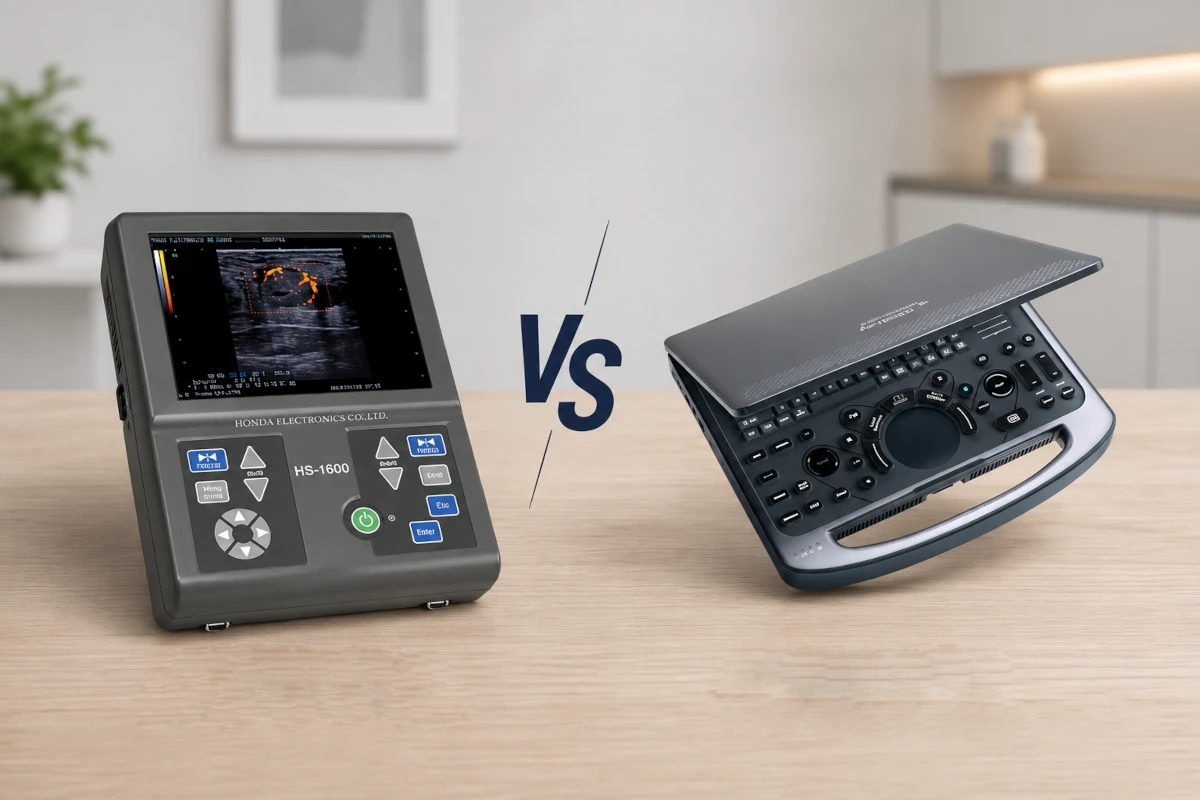
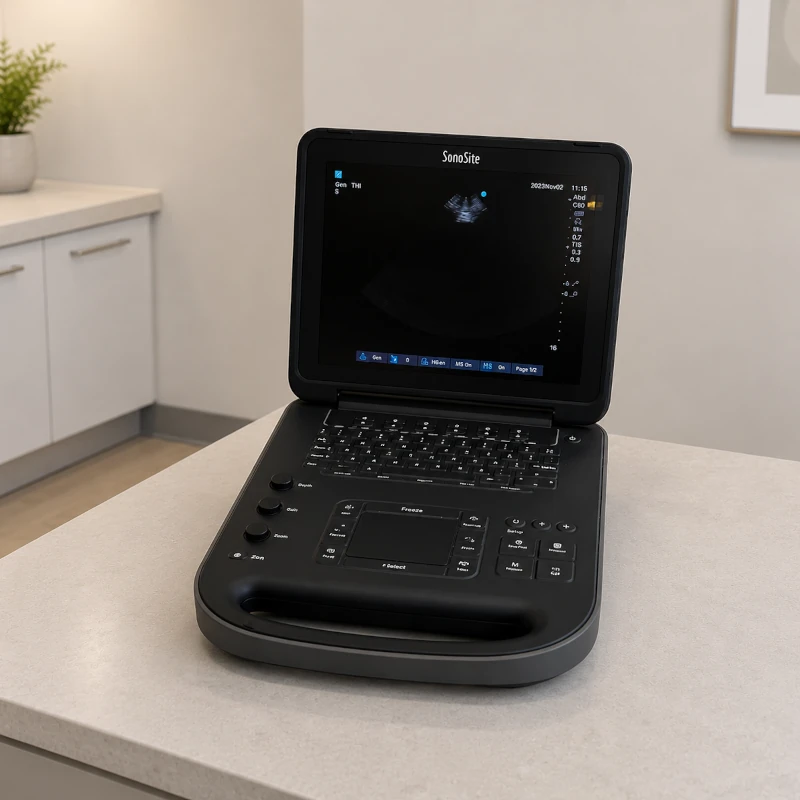
A portable veterinary ultrasound machine is usually a compact, laptop-style system that can be moved easily between locations. It offers more built-in functionality than a handheld scanner, including its own display, multiple probe options, and operation on either battery or mains power.
Compared with a cart-based machine, a portable system is much easier to carry and set up in different environments. It may not offer every advanced feature a larger console does, but it gives vets the flexibility to scan animals in exam rooms, barns, stables, and other field settings without needing a fixed imaging space.
Most portable units weigh only a few kilograms and support common probe types such as linear, convex, and microconvex, and understanding what an ultrasound probe is helps explain how these transducers affect image quality and depth. Many also include useful features like exam presets, color Doppler, image storage, and adjustable screen brightness for outdoor use.
Key Advantages of Portable Veterinary Ultrasound
Mobility and On-Site Diagnostics
One of the biggest benefits of portable ultrasound is mobility. It allows veterinarians to scan animals where they are, rather than arranging transport to a clinic or hospital.
In equine and farm work, that can make a major difference. Pregnancy checks, tendon exams, and abdominal scans can all be done on-site, which saves time and makes the process less stressful for the animal. It also gives mobile vets more flexibility and can help expand access to diagnostic services in rural areas.
Faster Workflow and Immediate Results
Portable ultrasound gives real-time feedback during the exam, which means vets can make decisions immediately.
That can be especially helpful in urgent cases. A portable machine can help identify internal bleeding, fluid buildup, masses, or other abnormalities during the visit itself. Instead of waiting for outside imaging, the vet can assess the situation and plan treatment right away. This speeds up care and reduces stress for both the animal and the owner.
More Cost-Effective Than Cart-Based Systems
Portable systems are usually less expensive than high-end cart-based machines, which makes them a practical option for many clinics and mixed practices.
They can also reduce the need to refer cases out for basic imaging. Keeping those exams in-house means the practice can offer more services directly, while making better use of its own equipment investment. Over time, that can make portable ultrasound a strong value, especially for practices that need flexibility without the cost of a full console system.
Versatility Across Animal Types
Many portable ultrasound machines support more than one probe and can be used across multiple species.
That makes them especially useful in mixed practice. The same system may be used for abdominal scans in dogs and cats, reproductive checks in cattle or horses, and basic cardiac or musculoskeletal exams in a variety of animals. For practices that do not want separate machines for every application, that versatility is a major advantage.
Compact and Space-Saving
Portable systems do not take up much room. They are easy to store, easy to move, and generally quick to set up when needed.
That is helpful not only for field vets, but also for clinics with limited space. A portable machine can often be used in multiple rooms without the footprint of a larger cart system, which helps keep the workspace more flexible.
Common Uses in Veterinary Practice
Reproductive and Pregnancy Diagnosis
Portable ultrasound is widely used for reproductive work, especially in cattle, horses, sheep, and goats.
It allows vets to perform pregnancy checks in the field and give producers timely information without bringing animals into a clinic setting. For herd work, speed and mobility matter, and portable systems are well suited to that kind of routine scanning.
Abdominal Imaging
Portable machines are commonly used to examine abdominal organs such as the liver, kidneys, bladder, and intestines.
They can help identify free fluid, masses, enlargement, obstruction, or other abnormalities during a routine visit. In many cases, that means treatment decisions can be made sooner and with more confidence.
Emergency and Field Diagnostics
In emergency situations, portable ultrasound can be incredibly useful. It allows vets to assess trauma, internal bleeding, or fluid accumulation quickly and on-site.
For field practitioners, that kind of immediate imaging can make a real difference. It supports faster triage and can help determine whether the animal can be treated in place, stabilized for transport, or referred for additional care.
Musculoskeletal and Soft Tissue Exams
Portable ultrasound is also valuable for evaluating tendons, ligaments, and soft tissue structures, especially in horses and other athletic animals.
These exams can help diagnose tendon injuries, ligament strain, and soft tissue masses in real time. That makes it easier to build treatment plans, recommend rest, and monitor healing over time.
Basic Cardiac Screening
Portable systems are not a full replacement for advanced cardiology platforms, but many can still handle basic cardiac screening.
They can be used to assess chamber size, wall motion, and general valve function, and color Doppler can help identify more obvious abnormalities. In general practice, that is often enough to decide whether a referral is needed.
Portable vs Handheld vs Cart-Based Ultrasound
Portable ultrasound sits in the middle of the market.
Portable systems offer a good balance of image quality, mobility, and probe flexibility. They are often the best fit for mixed practices, equine work, and mobile vets who need something more capable than a handheld unit.
Handheld systems are more compact and easier to carry, but they usually have smaller screens, fewer optimization tools, and lower image quality overall. They are useful for quick checks, emergency work, and basic scanning.
Cart-based systems provide the highest level of image quality and the most advanced features, but they are less practical when mobility is important. These are often the best choice for hospitals, referral centers, and practices focused on advanced imaging.
Limitations to Consider
Portable ultrasound machines are highly useful, but they do have limits.
Image Quality Differences
Portable systems have improved a lot, but larger console machines still tend to offer the best image quality and the most advanced imaging modes. If your practice needs elastography, contrast imaging, or more advanced cardiology tools, a cart-based system may still be the better choice.
Screen Size and Ergonomics
Portable units usually have smaller screens than full console systems. That may not matter much for routine scans, but for more detailed or prolonged exams, the smaller display can be less comfortable.
Battery Dependence
Battery-powered scanning is one of the strengths of portable ultrasound, but it also means battery life needs to be managed carefully. For longer field days, it is important to plan ahead, keep systems charged, and carry spare batteries when possible.
Fewer Advanced Features
Some portable systems do not include the full range of advanced features found on premium cart-based units. For many practices that is not a problem, but it is worth considering if you expect to do more specialist-level imaging.
When a Portable Ultrasound Is the Best Choice
A portable system is often the right fit when flexibility matters more than having every advanced feature available.
It makes a lot of sense for mobile veterinary services, where scanning happens at farms, stables, or client homes. It is also a strong option for equine and livestock practices that need a machine that can handle field conditions.
In smaller clinics, a portable system can work well as a second machine, a backup system, or even a main unit if most imaging needs are general rather than highly specialized. For practices focused on pregnancy diagnosis, abdominal work, and musculoskeletal exams, portable ultrasound often provides the right balance of performance and mobility.
Tips for Choosing a Portable Veterinary Ultrasound
Match the probes to your main applications
Start by thinking about the types of exams you do most often, including when to use different transducers such as those explained in linear vs convex ultrasound probes depending on depth and resolution needs. Reproductive work may require a rectal probe, while abdominal and musculoskeletal imaging may call for convex, microconvex, or linear probes. A system that supports multiple probes gives you more flexibility.
Consider weight and durability
If you will be carrying the machine regularly, weight matters. For farm and equine work, durability matters just as much. Look for a unit that can handle field conditions and transport without feeling fragile.
Check battery life and charging options
Battery performance is especially important for mobile vets. Long runtime, replaceable batteries, and charging options such as vehicle adapters can make a big difference during a busy day on the road.
Look at screen quality
If you scan outside or in bright environments, a good display matters. A higher-resolution screen with strong brightness can make the machine much easier to use in real-world conditions.
Think about service and support
Reliable support can be just as important as the machine itself. Training, maintenance, replacement parts, and service availability all matter in the long run.
Balance price with long-term value
The cheapest machine is not always the best value. Consider the full cost, including probes, accessories, software, and maintenance, and weigh that against how often you expect to use the system and what services it will let you offer.
Conclusion
Portable veterinary ultrasound machines have become an important part of modern practice because they combine mobility, convenience, and solid imaging performance. They make it possible to scan animals on-site, speed up decision-making, reduce transport stress, and expand diagnostic services without the size and cost of a full cart-based machine.
They may not replace high-end consoles in every setting, but for many clinicians they offer the most practical balance of performance and flexibility. When matched to the right type of work, a portable ultrasound system can be one of the most useful tools in a veterinary practice.
Frequently Asked Questions (FAQ)
-
What is the difference between portable and handheld ultrasound?
Portable ultrasound machines are usually laptop-style systems with their own screens and support for multiple probes. They generally offer better image quality and more features than handheld devices. Handheld units are smaller and easier to carry, but they usually rely on a phone or tablet and are more limited overall.
-
Are portable ultrasound machines accurate enough for diagnosis?
Yes, for many routine and general veterinary applications they are. Modern portable systems can provide reliable imaging for pregnancy diagnosis, abdominal exams, musculoskeletal work, and basic cardiac screening. They may not replace high-end systems for advanced imaging, but they are accurate enough for a wide range of everyday use cases.
-
How much do portable veterinary ultrasound machines cost?
Prices vary depending on the brand, probe package, and feature set. In general, portable systems cost less than cart-based units, but more than basic handheld devices. It is also important to account for extras such as probes, software, and service support.
-
Can portable systems be used for all animals?
They can be used across a wide range of animals, including small animals, horses, and livestock, especially when paired with the right probes and presets. That said, some very large or specialized cases may still require more specific equipment.
-
How long do portable ultrasound machines last?
With proper care and regular maintenance, portable ultrasound machines can last for many years. Their lifespan depends on build quality, usage, battery care, and service support. For field use, rugged construction can make a big difference over time.