Summary
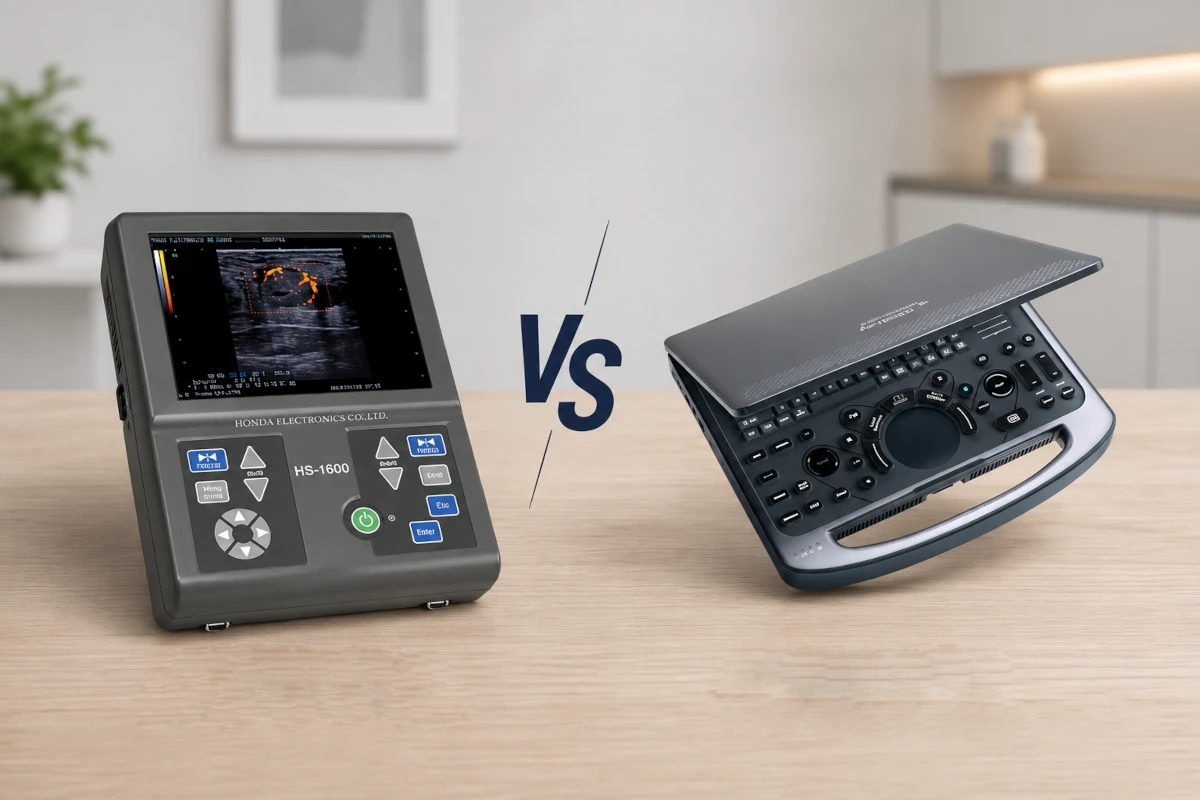
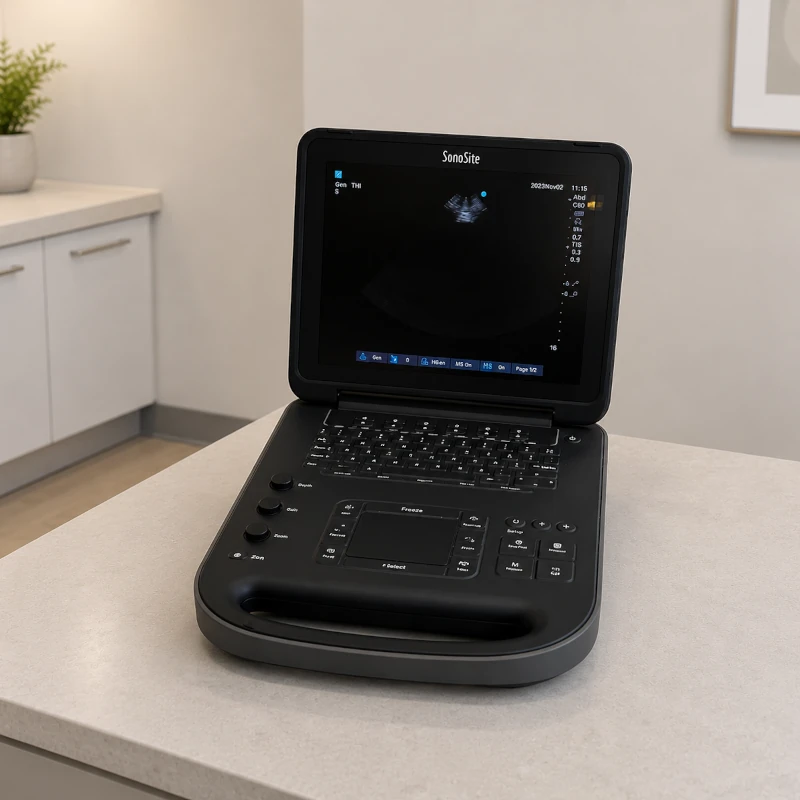
Portable ultrasound machines are compact imaging systems that bring high‑quality sonography to the point of care. These mobile units, from handheld probes that plug into a phone to laptop‑sized and cart‑based systems, have transformed how clinicians diagnose patients at the bedside, in remote settings and even in ambulances.
Introduction
Ultrasound uses high‑frequency sound waves to create real‑time images of soft tissue and organ structures. Portable ultrasound machines are mobile ultrasound systems designed to be used in small spaces, at the patient’s bedside or in the field.
They can be cart‑based, tablet‑based or hand‑carried, and demand for these devices has accelerated as hospitals look to improve point‑of‑care imaging and reduce reliance on a single stationary scanner.
Adoption surged during the COVID‑19 pandemic because portable devices allow clinicians in emergency, critical care and outpatient settings to obtain images quickly across departments. Throughout this article you’ll learn how portable ultrasound works, its benefits and limitations, the main device categories, common use cases, pricing considerations and where the technology is headed.
How Portable Ultrasound Works
At its core, ultrasound imaging relies on the physics of sound waves. A small transducer emits pulses of high‑frequency sound that penetrate tissue; echoes return to the probe and are converted into electrical signals, which a computer renders into real‑time images.
Portable scanners perform the same basic steps as larger consoles but in a streamlined workflow. A typical scan involves preparing the patient (removing obstructive clothing and jewellery), applying water‑based gel to eliminate air between the probe and skin, placing the transducer on the area of interest, moving it to capture a complete set of images and finally reviewing results with the patient.
Portable devices often transmit images wirelessly to a smartphone or tablet for viewing and documentation. Because the hardware and software are integrated into a compact form factor, clinicians can perform examinations at the point of care instead of transporting patients to a dedicated imaging suite.
Benefits of Portable Ultrasound
Portable ultrasound offers numerous advantages compared with traditional console machines. As seasoned ultrasound service professionals, we stress that these benefits must be weighed against your practice’s workflow, patient volume and clinical requirements.
Affordability
Cost is one of the biggest drivers of portable ultrasound adoption. Many handheld or point‑of‑care systems cost roughly one‑fifteenth as much as a standard console. In fact, handheld systems typically range from about $8,000 to $10,000, whereas full‑size ultrasound consoles often run $40,000 to $200,000 or more.
Lower hardware costs, coupled with subscription plans for software and maintenance, make portable devices attractive for small practices and community hospitals. When evaluating affordability, consider total cost of ownership, initial equipment price plus probes, software licences, consumables (such as gel and probe covers) and ongoing service contracts.
Scalability & Flexibility
Because portable devices are smaller and less expensive, clinics can deploy multiple units rather than relying on a single stationary machine. Handheld probes and lightweight laptops travel easily from room to room or into the field, enabling imaging in ambulances, rural clinics and home‑care settings.
Smaller footprints and battery power allow clinicians to image patients wherever they are, minimising wait times and increasing throughput. This flexibility lets departments scale operations without significant capital outlay.
Convenience & Efficiency
Point‑of‑care ultrasound reduces scheduling delays by bringing the scanner to the patient. Instead of sending patients to radiology, clinicians can perform exams bedside, discuss results immediately and make faster treatment decisions.
Portable devices streamline workflows by reducing the number of appointments, speeding triage in emergency departments and enabling earlier interventions. In remote or resource‑limited settings, paramedics and clinicians can use handheld systems to evaluate trauma or cardiac function en route to the hospital.
Safety & Accuracy
Ultrasound uses non‑ionizing sound waves, so it’s safe for repeated use during pregnancy and other sensitive examinations. The U.S. Food and Drug Administration notes that ultrasound imaging has “an excellent safety record”.
Modern portable devices also deliver accuracy comparable to high‑end systems. A recent scientific comparison found no significant differences between measurements obtained with a handheld device and those from a high‑end console, even though the handheld cost around one‑fifteenth as much.
Although handheld scans may take slightly longer when users are inexperienced, training and improved software are closing this gap.