Summary
GE veterinary ultrasound machines may be used across small animal, equine, farm, cardiac, reproductive, and specialty imaging. GE HealthCare’s veterinary ultrasound portfolio includes portable solutions, Versana, LOGIQ general imaging, and VIVID cardiovascular ultrasound, so buyers should compare the system family, probes, software, condition, and support before choosing.
Introduction
GE is not only a human medical imaging brand. GE HealthCare also presents a veterinary ultrasound portfolio designed for imaging across species, from routine exams to more complex interventions. Its veterinary page positions GE systems for different environments, including portable use, general imaging, routine clinic work, and cardiovascular ultrasound.
For veterinary buyers, GE may be especially relevant when a clinic wants broad imaging capability, advanced diagnostic tools, cardiac ultrasound options, or a premium system on the used or refurbished market.
This overview explains how GE veterinary ultrasound machines are used, which GE system families buyers may compare, where GE performs well, and what to check before buying a new, used, or refurbished system.
Where GE Fits in Veterinary Ultrasound
GE is best understood as a broad imaging brand rather than a narrow field-scanner brand. It may be relevant for small animal clinics, mixed veterinary practices, referral hospitals, veterinary cardiology users, advanced abdominal imaging, equine and large animal field diagnostics, mobile veterinary services, exotic animal diagnostics, and clinics comparing premium used or refurbished systems.
GE’s veterinary ultrasound page lists clinical applications across portable use, routine abdominal scans, pregnancy diagnosis, bladder assessment, LOGIQ general imaging, reproductive evaluation, exotic species diagnostics, and VIVID cardiovascular assessment.
This makes GE a flexible option, but not automatically the best option for every practice. A clinic doing advanced abdominal or cardiac work may view GE differently from a farm vet who mainly needs a simple, rugged pregnancy scanner.
GE’s Main Veterinary Ultrasound Categories
Portable GE Ultrasound Solutions
GE portable systems may appeal to vets who need imaging outside a fixed exam room. GE describes its portable veterinary solutions as being built on VIVID, LOGIQ, or Versana technology, with applications such as equine field diagnostics, large-animal emergency assessment, stable-side reproductive checks, farm calls, and mobile practice services.
These systems may suit vets who want GE imaging capability in a more mobile format. They may be useful for mobile practices, mixed clinics, equine work, or veterinary buyers who need portability without moving to a basic handheld-only setup.
Versana for Everyday Veterinary Imaging
Versana may be relevant for general practice workflows. GE positions Versana systems around intuitive design, automated tools, broad applicability, and use in private clinics and other clinical environments.
For veterinary buyers, Versana may suit clinics that want reliable daily ultrasound without necessarily needing the highest-end specialist platform. It may be relevant for routine abdominal scans, pregnancy diagnosis, bladder checks, and general clinic imaging, depending on the exact model and probes.
LOGIQ for General and Advanced Imaging
LOGIQ systems may be a stronger fit for practices needing more comprehensive imaging capability. GE lists LOGIQ veterinary applications including abdominal imaging, oncology assessment, biopsy guidance, pregnancy monitoring, reproductive evaluation, and exotic species diagnostics.
LOGIQ may suit clinics looking for broader diagnostic capability or premium refurbished value. It may be especially attractive for referral hospitals, specialty clinics, or advanced small animal practices that need more than basic scanning.
VIVID for Veterinary Cardiology
VIVID is GE’s cardiovascular ultrasound family and may be relevant for veterinary cardiac assessment. GE’s veterinary page positions the VIVID family for veterinary cardiac assessment, from routine screening to complex care.
VIVID should be viewed as a more specialised option, not the default choice for every veterinary clinic. It may be most relevant for practices that perform echocardiography, cardiac screening, or referral-level heart evaluations.
What GE Ultrasound Machines Are Commonly Used For in Veterinary Care
GE ultrasound systems may be used for abdominal ultrasound in dogs and cats, bladder and urinary tract checks, pregnancy diagnosis, reproductive exams, equine field diagnostics, farm and large animal assessments, oncology and mass evaluation, biopsy or needle guidance, exotic animal diagnostics, and cardiac ultrasound when the right VIVID system and probes are available.
The exact use depends on the machine, probes, software, and user training. A LOGIQ system configured for general imaging may not serve the same purpose as a VIVID system configured for cardiac work, and a portable GE setup may be chosen for a different workflow than a cart-based clinic system.
Review Angle: What GE Does Well
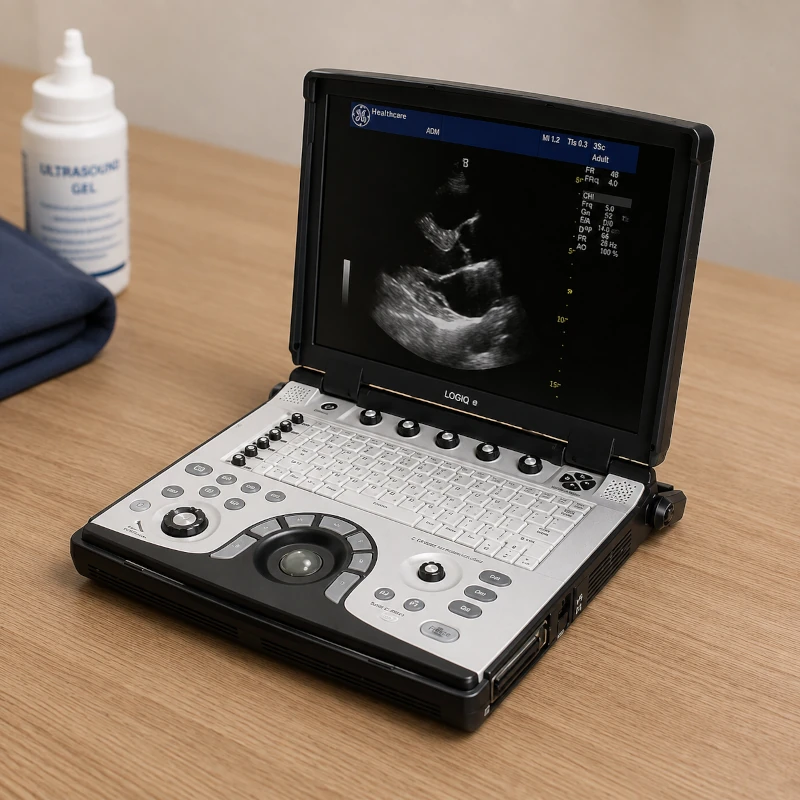
GE may stand out for its broad ultrasound system families, strong general imaging background, cardiovascular ultrasound options through VIVID, LOGIQ systems for more advanced diagnostic work, portable options for mobile and field settings, and availability on the used and refurbished market.
For clinics that need advanced imaging, GE can be attractive because its systems are part of a wider medical imaging ecosystem. Buyers may find options across general imaging, cardiovascular ultrasound, portable systems, and routine clinic platforms.
GE may also appeal to practices comparing refurbished GE ultrasound systems. Premium imaging systems can be expensive when new, so a tested refurbished GE unit may offer access to stronger imaging features at a lower upfront cost.
Where GE May Not Be the Best Fit
GE may not be ideal if the buyer needs the lowest-cost first ultrasound machine, mainly performs simple farm pregnancy scanning, or would be better served by a rugged veterinary-only field scanner.
It may also be less suitable if the available used system does not include suitable probes, local service support is limited, the system is older and software or parts availability is uncertain, or the clinic wants a system designed only around veterinary presets from the start.
GE can be excellent in the right setting, but buyers should choose by workflow, not brand reputation alone. A high-end GE system may be too much for a clinic that only needs occasional basic scanning, while an older GE unit without the right probes may be less useful than a newer veterinary-focused system.
The Probe Package Can Make or Break the Purchase
GE systems can be powerful, but the system is only useful if it includes the right probes for the practice’s exams. Probe compatibility should be checked by exact system model, not just by brand.
Veterinary probe needs may include micro-convex, linear, convex, and phased-array probes for small animal abdominal exams, superficial structures, abdominal and reproductive imaging, and cardiac exams, along with high-frequency, rectal, or specialty probes for exotic, equine, and livestock work.
GE’s veterinary probe page includes probe filters across system families such as Versana, VIVID, LOGIQ, and portable solutions, which reinforces that buyers should confirm probe compatibility carefully before purchase.
Probe condition also matters. A used GE ultrasound machine may look like a good deal, but damaged or missing probes can make the total cost much higher.
New, Used, or Refurbished GE Ultrasound Machines
Many veterinary buyers consider GE because premium medical imaging systems may become more accessible on the used or refurbished market. New systems may offer current warranty, support, and training. Used GE systems may reduce upfront cost, but they require careful condition checks.
Refurbished systems may offer better value if they have been inspected, tested, serviced, and sold with warranty or support. GE HealthCare also lists refurbished ultrasound systems across families such as LOGIQ, Vivid, and Versana, showing that refurbished GE ultrasound is a recognised buying category.
For veterinary buyers, probe condition can strongly affect total cost. Software options should be confirmed before purchase, and service history matters for older systems. A warranty or return policy is also important.
A refurbished GE system can be a strong purchase, but only if the probes, software, image quality, and service support match the clinic’s veterinary workflow.
What Buyers Often Misunderstand About GE Veterinary Ultrasound
GE is broad, so not every GE ultrasound system is automatically right for veterinary use. A VIVID system may be excellent for cardiac work but unnecessary for a clinic doing only basic abdominal scans.
A LOGIQ system may offer strong imaging, but probe setup still matters. A cheaper used GE machine may become expensive if probes are missing, damaged, or incompatible. Veterinary workflow, service support, and training matter as much as the brand name.
The best GE system is not always the newest or most advanced one. It is the one that fits the practice’s animals, exams, budget, and support needs.
What to Check Before Buying a GE Veterinary Ultrasound System
Before buying, check:
- Exact GE model and system family
- Intended veterinary use
- Included probes and compatibility
- Probe condition and test images
- Doppler and cardiac features, if needed
- Software options and measurement tools
- System age and service history
- Monitor, keyboard, ports, and controls
- Warranty or return policy
- Availability of replacement probes and parts
- Local service and technical support
This is especially important when buying used or refurbished equipment. Two GE systems with similar model names can have very different value depending on software, probes, condition, and support.
Final Buying Advice
GE veterinary ultrasound machines may be a strong option for clinics that want broad imaging capability, advanced diagnostic tools, cardiovascular ultrasound options, or premium refurbished value. They may be especially relevant for small animal clinics, referral hospitals, cardiology users, mobile practices, and clinics comparing LOGIQ, Versana, VIVID, or portable GE solutions.
A GE veterinary ultrasound machine can be a strong investment when the exact system, probes, software, condition, and support match the way your practice scans animals every day.
FAQ
Does GE make veterinary ultrasound machines?
GE HealthCare presents a veterinary ultrasound portfolio that includes portable solutions, Versana ultrasound, LOGIQ general imaging, and VIVID cardiovascular ultrasound for veterinary applications.
Is GE ultrasound good for veterinary clinics?
GE ultrasound may be a good option for veterinary clinics that need strong general imaging, abdominal ultrasound, cardiac assessment, guided procedures, or advanced diagnostic capability. The exact model, probes, software, and service support matter.
Which GE ultrasound system is best for veterinary use?
There is no single best GE ultrasound system for every veterinary practice. Versana may suit routine clinic work, LOGIQ may suit broader general imaging, VIVID may suit cardiology, and portable GE solutions may suit mobile or field workflows.
Is GE LOGIQ suitable for veterinary ultrasound?
GE LOGIQ systems may be suitable for veterinary general imaging. GE lists LOGIQ veterinary applications including abdominal imaging, oncology assessment, biopsy guidance, pregnancy monitoring, reproductive evaluation, and exotic species diagnostics.
Is GE VIVID used for veterinary cardiology?
GE VIVID may be relevant for veterinary cardiology. GE’s veterinary ultrasound page positions VIVID systems for veterinary cardiac assessment, from routine screening to complex care.
Should I buy a used GE ultrasound machine for veterinary use?
A used GE ultrasound machine can be worth considering if it is tested, includes suitable probes, has the needed software, and comes with service support or warranty. Buyers should check condition carefully before purchasing.
What should I check before buying a GE veterinary ultrasound machine?
Check the exact model, probe compatibility, included probes, probe condition, software options, Doppler features, cardiac capability if needed, image quality, service history, warranty, and replacement part availability.