
Summary
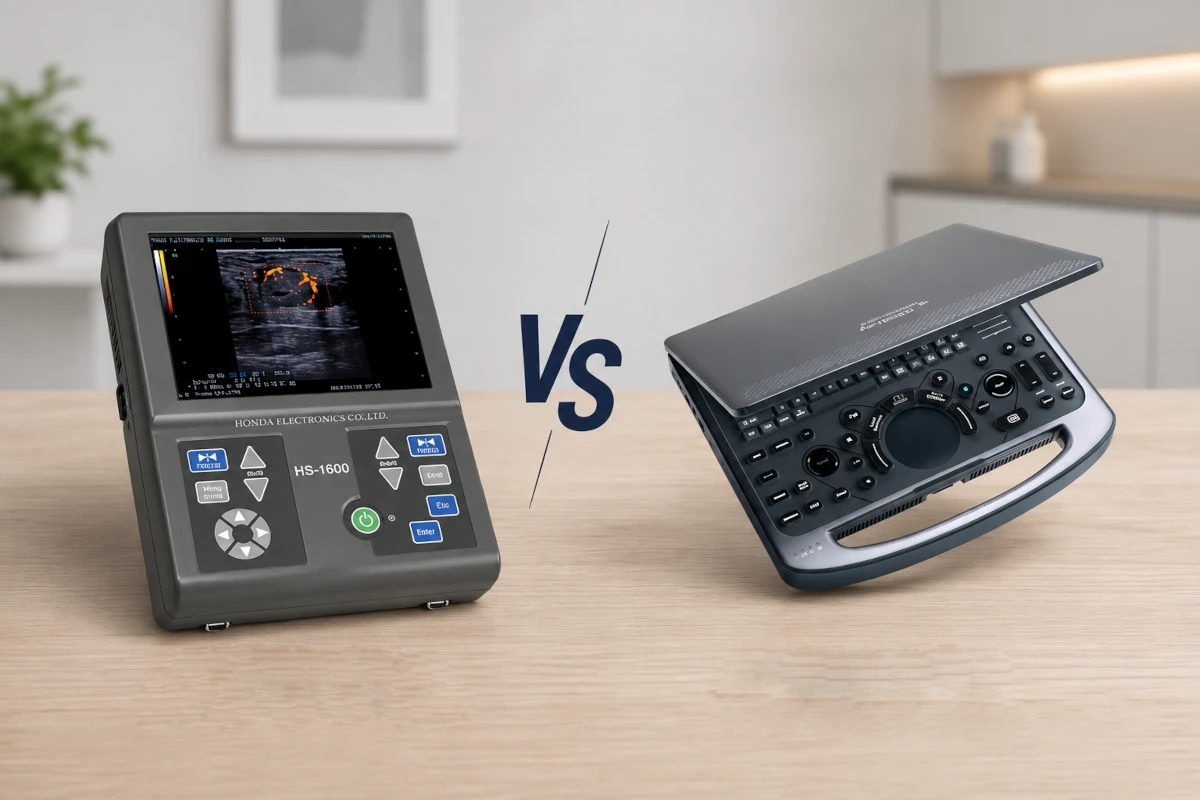
Mindray and Draminski both offer veterinary ultrasound systems, but they often appeal to different buyers. Mindray may suit clinics wanting a broader range of portable and cart-based systems, while Draminski may appeal more to vets who value portable, field-friendly veterinary scanners for horses, farm animals, and mixed practice.
Introduction
Veterinary ultrasound is now used across many areas of animal care, from small animal clinics to equine practices, farms, referral hospitals, emergency settings, and mobile veterinary services. It can help vets assess soft tissue structures in real time, support reproductive decisions, guide procedures, and improve diagnostic confidence without relying only on physical exams or X-rays.
Choosing a veterinary ultrasound machine is not just about buying the most advanced system. The right machine depends on the animals scanned, the exams performed, image quality needs, portability, probe selection, budget, and long-term service support.
Pricing can vary significantly. Current buyer guides place veterinary ultrasound systems anywhere from a few thousand dollars for basic or portable units to well over $50,000 for advanced or cart-based systems, depending on system type, probes, imaging features, condition, software, and support.
What Is a Veterinary Ultrasound Machine?
A veterinary ultrasound machine uses sound waves to create real-time images of structures inside an animal’s body, which is why understanding what ultrasound is used for can help buyers choose the right system. It is commonly used because it is non-invasive, does not use ionising radiation, and can help vets evaluate organs, fluid, soft tissue, pregnancy, tendons, and blood flow.
Veterinary ultrasound can be used in small animal clinics, equine practices, farm and livestock settings, mobile veterinary services, emergency care, specialty hospitals, and referral centres. The same general technology is used across these settings, but the best machine setup can look very different depending on the species and workflow.
A small animal clinic may need a clear abdominal imaging system with micro-convex and linear probes. An equine vet may need a portable system with a rectal probe and high-frequency linear probe. A livestock vet may need a rugged scanner that works quickly in chutes, barns, and outdoor conditions.
What Veterinary Ultrasound Machines Are Used For
A veterinarian may use ultrasound to evaluate abdominal organs in dogs and cats, check pregnancy, assess reproductive structures, examine the bladder and urinary tract, investigate soft tissue masses, or guide biopsies and fluid sampling.
In equine care, ultrasound may help evaluate tendons, ligaments, reproductive structures, soft tissue swelling, and selected abdominal concerns. In livestock care, it is often used for pregnancy diagnosis, fertility work, herd planning, and reproductive management.
Ultrasound may also be used in emergency settings to check for fluid or internal injury, and in advanced clinics for cardiac exams when the system has the right phased-array probe, Doppler tools, and user expertise.
The key point is that ultrasound machine choice should follow clinical use. A machine used mainly for cattle pregnancy checks does not need the same configuration as a system used for small animal echocardiography or referral-level abdominal imaging.
The Main Types of Veterinary Ultrasound Systems
Handheld Veterinary Ultrasound
Handheld veterinary ultrasound systems are usually chosen for portability, quick checks, and highly mobile workflows. They may be useful for basic pregnancy checks, livestock scanning, point-of-care exams, mobile vets, and practices that need a simple secondary scanner.
Handheld systems can be convenient, but buyers should check their limitations carefully. Image quality, probe choice, battery life, app workflow, storage, and diagnostic suitability can vary widely. A handheld scanner may be excellent for quick field checks but less suitable for detailed abdominal or cardiac exams.
Portable Laptop-Style Systems
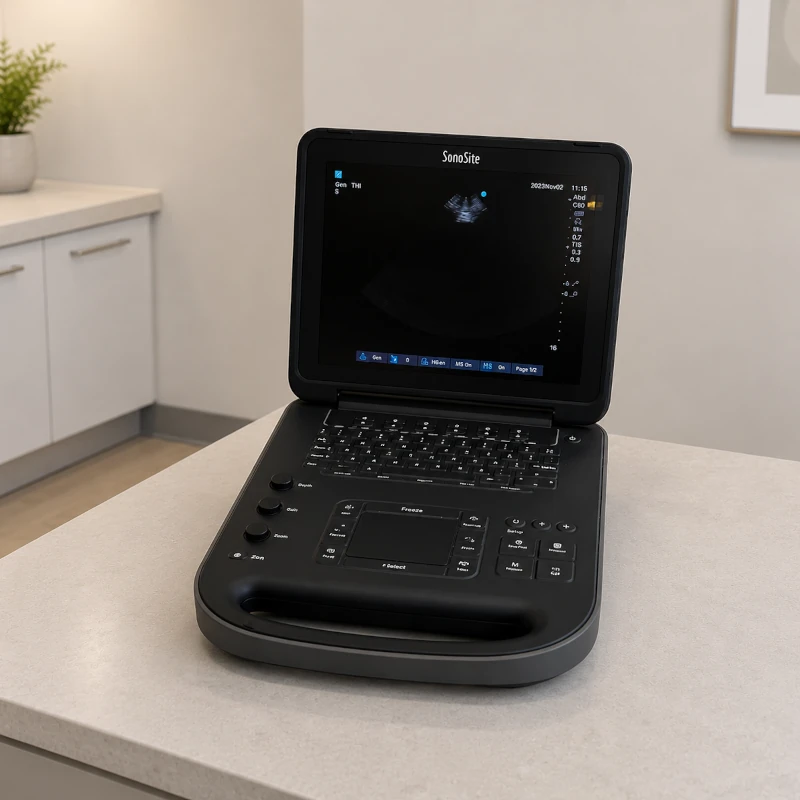
Portable ultrasound machines are often the middle ground between handheld and cart-based machines. They can offer stronger imaging and a more familiar interface than basic handheld units while still being practical for mobile vets, equine work, farm visits, and clinics with limited space.
Portable systems are often more accessible than larger cart-based platforms. Current buyer guides note that portable and handheld veterinary ultrasound technology has become more affordable, with some capable portable systems available below the cost of larger cart-based systems.
Cart-Based Veterinary Ultrasound
Cart-based veterinary ultrasound systems are usually better for clinics that scan regularly. They often provide a larger display, stable workflow, multiple probe ports, stronger imaging features, better ergonomics, and more comfortable use during longer exams.
These systems may be a good fit for busy small animal clinics, referral hospitals, specialty practices, advanced abdominal imaging, cardiac or Doppler work, and high-volume ultrasound appointments. They are less convenient for mobile or farm use, but they can be very effective in a dedicated imaging room.
Field and Livestock Ultrasound Systems
Field and livestock ultrasound systems are built around durability, battery life, cleaning, speed, and practical handling. These may include wearable, portable, or probe-focused setups designed for real farm environments.
They are often used for cattle pregnancy checks, sheep and goat scanning, farm reproductive work, herd management, chute-side exams, and mixed-practice veterinary work. IMV Imaging describes its veterinary ultrasound range as covering small animal, equine, and farm markets, while Draminski describes compact veterinary handheld scanners as suitable for field work, bovine ultrasound, livestock ultrasound, reproduction monitoring, and internal organ exams.
Veterinary Ultrasound Pricing: What Buyers Should Expect
Veterinary ultrasound pricing depends on system type, brand, age, condition, probes, Doppler features, software options, warranty, and seller support.
Basic handheld or entry-level portable units may start from a few thousand dollars. Mid-range portable veterinary systems usually cost more, especially when they include better probes, Doppler, battery support, and veterinary software. Equine and livestock systems can vary depending on durability, battery setup, screen options, and reproductive probe packages. Advanced cart-based or specialty systems can cost significantly more, especially with multiple probes and advanced software.
Several 2026 buyer guides place portable or handheld veterinary ultrasound systems in broad ranges such as roughly USD $3,000–$15,000 for many portable options, while used or refurbished systems may range from about $3,000–$30,000 depending on condition and configuration. Other guides place the wider veterinary ultrasound market from around $2,000 to over $50,000.
Pricing should always be confirmed with a supplier because probes, accessories, warranty, software, training, and service support can change the final cost.
Why the Probe Package Changes the Price
The ultrasound machine is only part of the purchase. The probes included often determine what the system can actually do.
Micro-convex, linear, convex, and phased-array probes are used for different veterinary exams, from small animal abdominal scans to superficial, reproductive, and cardiac imaging. A linear probe is used for tendons, superficial structures, vessels, and soft tissue. A convex probe is useful for abdominal and reproductive imaging. A phased-array probe is important for cardiac exams. A rectal probe may be needed for equine and livestock reproductive work. A high-frequency probe can help with small patients, superficial anatomy, and exotic animals.
A lower-priced machine may not be a good deal if it does not include the right probes. It may also become expensive if the probes are damaged, worn, incompatible, or difficult to replace. Before comparing prices, buyers should compare the full package: machine, probes, software, battery, accessories, warranty, and support.
New, Used, and Refurbished Veterinary Ultrasound Machines
New veterinary ultrasound machines may offer the latest features, full warranty, manufacturer support, current software, and easier access to training.
Used machines can reduce upfront cost, but condition, probes, software, and service history must be checked carefully. A used system may look affordable but become costly if a probe needs replacement or the software does not support the clinic’s needs.
Refurbished machines may offer a middle ground if they have been inspected, tested, cleaned, repaired where needed, and sold with warranty or service support.
Before purchasing used or refurbished equipment, buyers should ask for image testing, probe condition details, warranty terms, service options, battery condition for portable systems, and confirmation that replacement probes and parts are available.
Small Animal, Equine, and Farm Uses Are Not the Same
Small Animal Clinics
Dog and cat clinics often need ultrasound for abdominal imaging, bladder checks, soft tissue evaluation, pregnancy confirmation, guided procedures, and sometimes cardiac ultrasound.
The most important factors are image quality, micro-convex and linear probes, Doppler if needed, ease of use, fast image storage, and reliable clinic workflow. Mindray, for example, lists both cart-based and portable veterinary ultrasound systems designed for image quality, dedicated veterinary parameters, and user-friendly workflow.
Equine Vets
Equine vets often need ultrasound for reproductive exams, tendon and ligament imaging, soft tissue swelling, and sports horse follow-up.
The key factors are portability, battery life, screen visibility, linear and rectal probe options, and durability in barns or stables. A system used in the field should be judged differently from a system used in a dedicated imaging room.
Farm Animal Vets
Livestock ultrasound is often used for pregnancy diagnosis, reproductive management, fertility work, and herd planning.
The key factors are speed, battery life, rugged design, easy cleaning, probe durability, and suitability for high-volume scanning. For cattle, sheep, goats, pigs, alpacas, llamas, and other production animals, the best system is usually one that fits the actual farm workflow, not just the one with the longest feature list.
What Makes a Veterinary Ultrasound Machine Worth the Price?
The best value is not always the cheapest system. A good veterinary ultrasound machine should save time, support better diagnostics, fit the practice’s workflow, and remain serviceable.
Buyers should judge value based on image quality for the intended exams, probe compatibility, battery life for portable systems, Doppler features if needed, ease of cleaning, training requirements, warranty, service support, replacement probe availability, parts availability, and whether the machine can grow with the practice.
GE HealthCare’s veterinary ultrasound portfolio, for example, includes LOGIQ, Versana, VIVID, and portable solutions for different veterinary imaging needs, while Mindray’s veterinary range includes both cart-based and portable systems built around animal care workflow.
A veterinary ultrasound machine is worth the price when it fits the animals you scan, the exams you perform, and the way your practice actually works.
Common Mistakes When Buying Veterinary Ultrasound Equipment
A common mistake is buying based only on price. A cheaper system may not be a bargain if it lacks the right probes, has poor image quality, weak battery life, or limited service support.
Another mistake is choosing the system before choosing the probes. Probe selection should come early in the buying process because it determines what exams the machine can perform.
Buyers should also avoid assuming every machine supports Doppler, buying used equipment without test images, ignoring battery health on portable systems, buying a human system without checking veterinary workflow, choosing a farm scanner for advanced small animal imaging, buying a premium system with features the clinic will rarely use, and forgetting service, repair, and replacement probe costs.
Questions to Ask Before Buying
Before buying a veterinary ultrasound machine, ask:
- What species will the system be used for most often?
- Will it be used in clinic, mobile, farm, or stable settings?
- Which probes are included?
- Are the probes tested?
- Does the system include Doppler?
- Is the machine new, used, or refurbished?
- Are sample images available?
- What warranty or return policy is included?
- Is service support available?
- Are replacement probes and parts easy to source?
These questions help buyers compare real value rather than relying only on advertised price or brand reputation.
Final Buying Advice
The best veterinary ultrasound machine depends on the practice’s real workload. A small animal clinic may need a different system from an equine vet, livestock vet, mobile practitioner, or referral hospital.
The right veterinary ultrasound machine should match your species, scanning environment, probe needs, budget, and long-term service requirements, not just the lowest advertised price.
FAQ
How much does a veterinary ultrasound machine cost?
Veterinary ultrasound machine pricing varies widely. Basic or portable systems may start from a few thousand dollars, while advanced portable, equine, livestock, or cart-based systems can cost much more depending on probes, software, condition, and warranty.
What is a veterinary ultrasound machine used for?
Veterinary ultrasound machines are used for abdominal exams, pregnancy checks, reproductive work, soft tissue imaging, tendon and ligament exams, cardiac evaluation, bladder checks, emergency assessment, and guided procedures.
What type of ultrasound machine is best for a small animal clinic?
Small animal clinics often need a system with strong abdominal imaging, micro-convex and linear probes, simple workflow, good image storage, and Doppler if cardiac or advanced work is offered.
What type of ultrasound machine is best for equine vets?
Equine vets usually need a portable system with good battery life, durable probes, screen visibility, and suitable linear or rectal probes for tendon, ligament, and reproductive exams.
Are portable veterinary ultrasound machines good?
Yes, portable veterinary ultrasound machines can be very useful, especially for mobile vets, equine vets, farm vets, and clinics with limited space. Buyers should still check image quality, battery life, probe options, and support.
Should I buy a used veterinary ultrasound machine?
A used or refurbished veterinary ultrasound machine can be worth buying if it has been tested, includes suitable probes, has clear image quality, and comes with warranty or seller support.
What affects the price of veterinary ultrasound equipment?
Price is affected by system type, brand, age, condition, probe package, Doppler features, software options, warranty, service support, and whether the machine is new, used, or refurbished.