Summary
Used and re-engineered ultrasound parts can be a smart purchase when they come from a vendor that can prove the part is safe, compatible, and properly tested. Done well, buying pre-owned or re-engineered components can reduce repair costs, shorten downtime, and support sustainability by keeping imaging systems in service longer.
The key is knowing which parts are reasonable to buy used and which ones deserve much more caution. Lower-risk items such as control panel components, some cables, and certain power modules are often better candidates than probes or parts that could change system performance, safety, or regulatory status.
Introduction
Ultrasound systems are built to last, but not every part wears at the same pace, and understanding the key ultrasound machine parts can help clinics identify which components are more likely to fail over time. Buttons fail, connectors loosen, cables crack, and power supplies age long before the rest of the machine is ready for retirement. When that happens, the question is not only how to fix the system, but how to fix it safely and economically.
That is where used and re-engineered parts come in. A used part is typically harvested from another machine. A re-engineered part is rebuilt or newly made to match the original function. Both can make sense, but only if the supplier can show traceability, compatibility, and testing. FDA guidance is especially important here: once a repair or replacement changes a device’s performance, safety, intended use, or software-driven behavior in a meaningful way, the work may cross the line from servicing into remanufacturing, which brings different regulatory expectations.
Why Clinics Consider Used or Re-Engineered Parts
The biggest reason is straightforward: cost. Replacing a small failed section with a targeted part is often far cheaper than buying an entire OEM assembly. In practice, the exact savings vary widely by model, vendor, and part type, so fixed percentages should be treated as examples rather than guarantees. The real advantage is that component-level repair can often restore function without forcing the buyer into the cost of a full assembly swap.
The second reason is uptime. If a clinic can source a tested replacement part quickly, the scanner may return to service much sooner than if it has to wait for a full OEM exchange or manufacturer field visit. Faster turnaround matters in busy departments where even a short outage can disrupt schedules and revenue.
There is also a sustainability angle. Recent healthcare sustainability literature notes that roughly 70 percent of healthcare emissions come from the supply chain for goods and services, which is one reason reuse, repair, and refurbishment are drawing more attention. xtending the life of an imaging system or replacing a smaller component instead of scrapping a larger assembly can support both cost control and waste reduction, which is especially relevant when considering how long ultrasound machines last and how proper maintenance affects equipment longevity.
Which Ultrasound Parts Are Usually Safer to Buy Used?
Control panel buttons and user-interface components
Buttons, knobs, encoders, and some control-panel subcomponents are often among the more reasonable used or re-engineered purchases. They are high-wear items, their failure modes are usually obvious, and a good vendor can often inspect, replace, and function-test them without changing the core imaging behavior of the system. These parts still need to match the exact model and revision of the scanner, but they are generally lower risk than buying a critical imaging component blind.
The practical rule here is simple: buy only if the vendor can confirm exact compatibility and provide a clear test process. A part that physically fits is not enough. It also has to behave correctly within the system.
Cables and some connectors
External cables and some connector assemblies can also be reasonable candidates, especially when the replacement is like-for-like and the supplier performs electrical and mechanical testing. These parts fail often because of repeated handling, and they are sometimes repairable without altering the rest of the device.
Still, this is an area where quality matters a lot. Poor connector fit, weak strain relief, or bad shielding can create intermittent faults that are frustrating to diagnose and may affect image quality or safety. If the vendor cannot explain how the part was tested for continuity, fit, insulation, and durability, walk away.
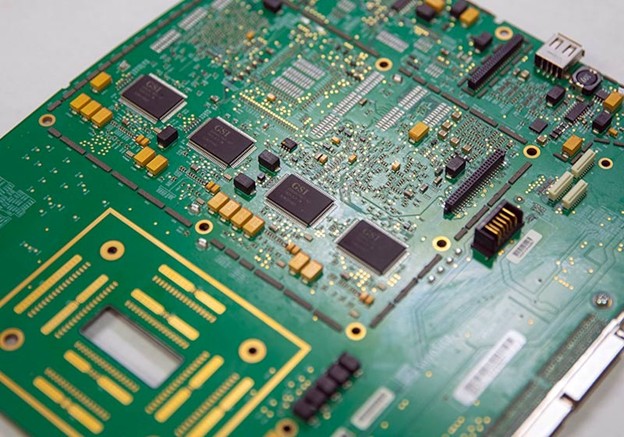
Some power supplies and non-imaging boards
Certain power supplies and support boards can be safe buys when they are truly equivalent to the original part and come with documented electrical testing. These components matter because unstable power can cause repeat failures elsewhere in the system. That means the part should never be treated as a cheap commodity. It needs proper validation.
A reliable vendor should be able to explain what was checked before the part was released, including performance under load, protection behavior, and overall compatibility with the system model.
Parts That Need Extra Caution
Probes and transducers
Used or refurbished probes can be safe, but they demand much more scrutiny than most other parts. A probe is not just a cable and a shell, and understanding what an ultrasound probe is helps explain why even small internal issues can affect acoustic performance and diagnostic image quality. It is a precision acoustic device, and a probe that looks fine externally can still have damaged elements, weak beam uniformity, leakage problems, or degraded image performance.
hat is why visual inspection alone is not enough, and clinics often rely on specialized ultrasound probe repair services that include detailed electrical and acoustic testing before returning a probe to clinical use. Credible probe testing should include quantitative checks such as electrical leakage testing, acoustic output mapping, beam uniformity analysis, and image-quality validation. If a seller only says the probe “powers on” or “looks good on a scanner,” that is not strong enough evidence for a clinical purchase.
For routine or noncritical use, a well-documented refurbished probe may be acceptable. For critical applications, high-acuity departments, or situations where there is any uncertainty, OEM or OEM-authorized options often provide the highest confidence.
Parts that could alter regulated performance
Some parts are too central to system behavior to treat casually. If replacing or redesigning the part could change acoustic output, signal processing, shielding, software behavior, or other performance characteristics, the risk is no longer just whether the part works. It becomes a question of whether the device is still behaving as cleared and intended. FDA’s 2024 remanufacturing guidance makes this distinction especially important.
This is where buyers should be careful with heavily modified boards, substitute electronics, or “equivalent” parts that do not clearly map to the original design. When a part changes function rather than simply restoring it, OEM replacement is usually the safer path.
What to Avoid
Avoid parts with unknown history, weak documentation, or suspiciously vague descriptions. A low price does not help if the part arrives with hidden wear, incomplete refurbishment, or no proof of testing. Refurbished-device literature consistently flags contamination, worn parts, misalignment, and incomplete process control as real risks when quality systems are weak.
Also avoid vendors that cannot answer basic technical questions. If they cannot provide serial numbers, model compatibility, test documentation, repair history, or warranty terms, you are not really buying a verified medical component. You are guessing.
How to Evaluate a Supplier
A good supplier should have a real quality system, not just a warehouse. ISO 13485:2016 remains the current international quality-management standard for medical devices, and it applies to organizations involved in design, production, installation, and servicing. While certification alone does not guarantee perfect quality, it is a strong signal that the vendor has documented processes and traceability.
Ask direct questions. Do they repair and test parts in-house or simply broker them? Can they explain the testing process for each part type? Do they provide inspection records, service history, compatibility confirmation, and warranty terms? For probes especially, ask what quantitative tests were performed. If the answer is vague, that is your answer.
Support matters too. A supplier that can offer technical help, realistic lead times, and a clear return process is far more valuable than one that only competes on price. In medical equipment, the cheapest part is often the most expensive mistake.
Practical Buying Rules
Buy used or re-engineered parts only when the replacement restores the original function without creating uncertainty about safety or performance. That usually makes more sense for high-wear, lower-risk parts than for probes or advanced electronics.
Treat vendor-specific savings claims carefully. They may be real in a particular case, but they are not universal. Ask for evidence tied to your exact system model and part number.
For probes, insist on data, not reassurance. Quantitative testing is the difference between a refurbished probe and a gamble.
When the part is safety-critical, performance-critical, under warranty, or likely to trigger regulatory questions, OEM or OEM-authorized replacement is usually the better decision.
Conclusion
Used ultrasound parts can absolutely be safe to buy, but not all parts carry the same risk. Control-panel components, some cables, and certain power-related parts are often reasonable candidates when they are sourced from vendors who can prove compatibility, testing, and traceability. Probes and parts that could alter imaging or system behavior deserve a much higher bar.
The best buying decision is usually not the cheapest one. It is the one that restores function, protects patient safety, fits within the device’s regulatory and quality framework, and comes with enough documentation that your team can defend the purchase with confidence.
Frequently Asked Questions
-
Which ultrasound parts are usually safest to buy used?
Lower-risk, high-wear components such as buttons, some control-panel parts, certain cables, and some power modules are often safer candidates than probes or complex imaging electronics, provided the vendor can document testing and compatibility.
-
Are used ultrasound probes safe?
They can be, but only when the seller provides strong evidence of quantitative testing, including electrical and acoustic performance checks. A visual check or basic scanner image is not enough on its own.
-
How much can I save with re-engineered parts?
Savings can be meaningful, but they vary by system, part, and vendor. Treat quoted percentages and example prices as case-specific rather than universal, and ask for part-level justification tied to your equipment.
-
What should I ask a supplier before buying?
Ask about exact compatibility, in-house testing, quality certification, warranty terms, traceability, turnaround time, and whether the repair restores original function without changing device performance.
-
When should I choose OEM instead?
Choose OEM when the part is critical to safety or imaging performance, when the system is under warranty, when the replacement could affect regulatory status, or when the vendor cannot provide convincing technical documentation.