Summary
Canon ultrasound machines, previously known under the Toshiba Medical Systems name, are well known for strong image quality and dependable performance across a wide range of specialties. Their lineup includes premium systems like the Aplio i-series, mid-range platforms such as the Aplio a-series, and portable options like the Xario range. These machines are used in radiology, cardiology, OB/GYN, vascular imaging, and general ultrasound, so it helps to understand what they do well and where they fit best.
Introduction
Canon Medical Systems has a long history in diagnostic imaging, and its ultrasound platforms have built a reputation for clear imaging, consistent performance, and user-friendly design. Across the lineup, Canon focuses heavily on image quality and workflow efficiency, which is part of why the brand remains a strong option for hospitals, imaging centers, and specialist practices.
Many of Canon’s newer systems also include advanced features such as improved beamforming, microvascular imaging, and AI-assisted tools that help automate certain measurements and improve workflow. The result is a product line that can support everything from routine general imaging to more advanced cardiac, vascular, and women’s health applications.
This guide gives an overview of Canon’s main ultrasound product lines, highlights the key technologies behind them, and explains where these systems tend to perform best.
What Are Canon Ultrasound Machines?
Canon ultrasound machines are general diagnostic imaging systems designed to support a wide range of clinical uses, combining multiple ultrasound machine parts into a cohesive imaging platform. Like other ultrasound platforms, they create real-time images by sending sound waves into the body and interpreting the echoes that return.
What makes Canon stand out is the way it combines image clarity, Doppler performance, and practical workflow tools across different product tiers. The company offers everything from premium console systems for advanced imaging departments to portable units that are easier to move between rooms or use in more flexible settings.
Because of that range, Canon systems can be found in radiology, cardiology, OB/GYN, vascular labs, general imaging departments, and in some cases mobile or bedside environments as well.
Key Features of Canon Ultrasound Systems
Advanced Imaging Technology
Canon places a strong emphasis on image quality, and much of that comes from its imaging architecture and beamforming technology.
In the Aplio i-series, features such as iBeam+ and Intelligent Dynamic Micro-Slice technology are designed to sharpen the ultrasound beam and keep the image clear from near field to deeper structures. Canon also uses wideband transducers that support strong sensitivity and resolution across different depths.
On some systems, tools like Ultra Wide View help expand the field of view, while AI-assisted functions can help users detect structures and complete certain measurements more quickly. In the Aplio a-series, technologies such as Precision+ and ApliPure+ are intended to reduce noise, improve contrast, and make lesion borders easier to see.
Strong Doppler and Microvascular Imaging
Canon is also known for Doppler performance, especially when it comes to small vessels and slow blood flow.
Its Superb Micro-vascular Imaging, or SMI, is one of the better-known examples. This technology is designed to show very small vessels and low-velocity flow that may be harder to see with standard Doppler alone. On some systems, Canon also offers improved versions such as iSMI for larger areas of interest without sacrificing frame rate.
For buyers working in vascular imaging, small parts, or other detail-heavy applications, this is one of the biggest reasons Canon often stays in the conversation.
Ergonomic, User-Friendly Design
Canon systems are generally built with workflow in mind. The consoles are designed to be comfortable to use, the interfaces are relatively intuitive, and many systems include programmable controls and touch-based functions that can help speed up exams.
The Aplio i-series focuses on more advanced workflow customization and context-sensitive controls, while the Aplio a-series and Xario systems aim to keep things efficient and straightforward for busy imaging environments. Portable options such as the Xario 100G are built for quick startup and mobile use, which adds flexibility for smaller clinics or bedside scanning.
Broad Probe Selection
Canon supports a wide range of transducers across its product line, including linear, convex, phased array, and more specialized options.
One of the more notable examples is the high-frequency linear transducer available for premium Aplio systems, which is aimed at very detailed superficial imaging. More broadly, Canon’s probe portfolio supports general abdominal work, vascular imaging, cardiology, OB/GYN, musculoskeletal exams, and other common applications.
That flexibility is one reason Canon systems can fit so many different practice types.
Reliability and Long-Term Use
Canon machines are generally seen as durable systems built for long-term clinical use, which aligns with expectations around how long ultrasound machines last in high-volume clinical environments. Premium platforms such as the Aplio i800 are designed for high-volume environments, while mid-range systems focus on offering a balance of performance, durability, and lower overall cost.
For many buyers, that reputation for reliability is an important part of the value, especially in settings where uptime matters.
Canon Ultrasound Product Lines Explained
Aplio i-Series
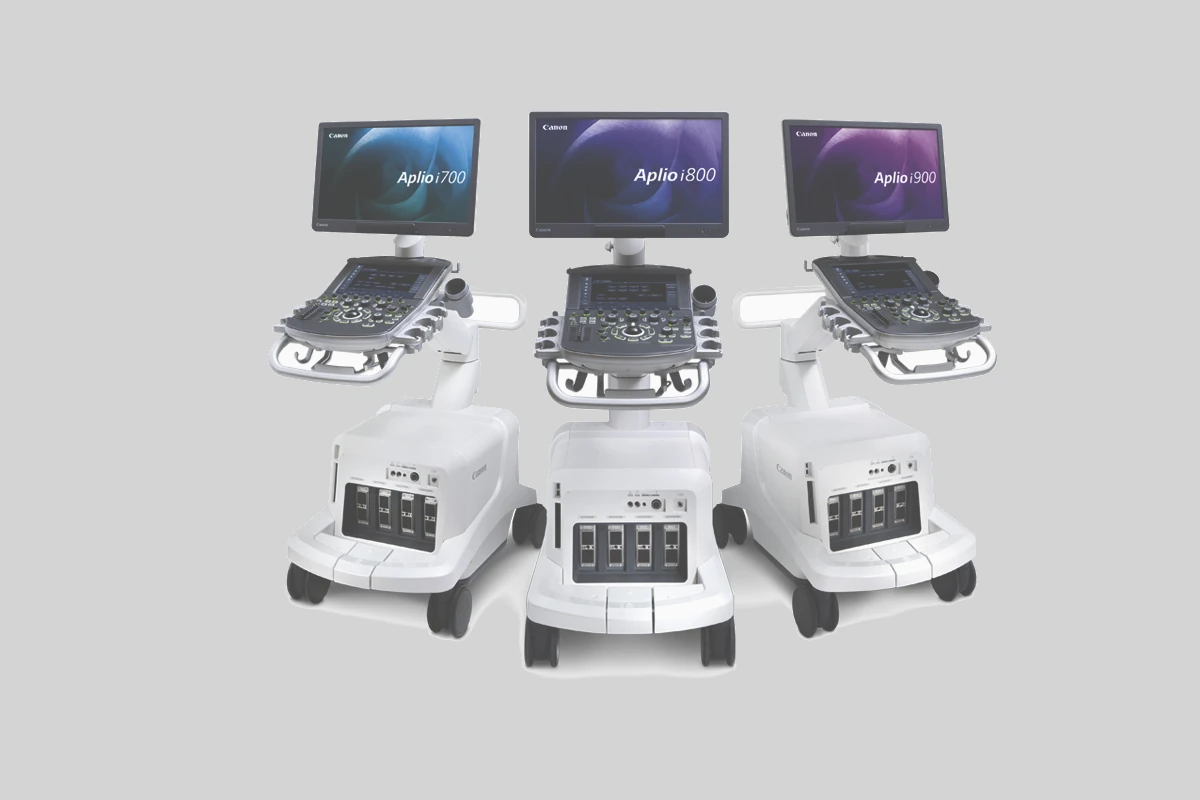
The Aplio i-series is Canon’s premium ultrasound lineup. These systems are designed for facilities that need top-tier imaging performance, advanced Doppler, AI-assisted workflow tools, and a wider range of high-end transducers.
The i-series is a strong fit for larger hospitals, specialty departments, and practices that need high-resolution imaging across demanding applications such as radiology, vascular work, women’s health, and advanced cardiac imaging.
Aplio a-Series
The Aplio a-series sits below the premium line but still offers many of Canon’s core imaging strengths. It is designed as a more scalable and flexible option for facilities that want strong image quality and workflow support without stepping all the way up to the flagship tier.
This series tends to work well for busy imaging departments, outpatient clinics, and practices that want good performance with room to expand features over time.
Xario Series
The Xario line is aimed at the mid-range segment and combines solid imaging performance with a more compact and ergonomic design.
Xario systems are often a practical choice for general radiology, women’s health, smaller imaging departments, and clinics that need strong everyday performance without the size or cost of a premium console. Features like QuickScan and customizable controls help make the workflow more efficient.
Viamo and Portable Systems
Canon’s portable systems, such as the Xario 100G, are built for mobility without giving up too much in terms of image quality, fitting into the broader category of portable ultrasound machines types used across modern clinical workflows.
These units are useful in settings where space is limited or where the machine may need to move between rooms or departments, and many buyers also explore used portable ultrasound machines as a more cost-effective option. They are often a good fit for bedside scanning, smaller clinics, and practices that need portability but still want a system that feels more capable than a basic handheld device.
Common Clinical Applications
Canon ultrasound systems are used across a wide range of specialties.
General imaging and radiology
They are commonly used for abdominal imaging, thyroid studies, breast exams, and soft tissue evaluation, where image clarity and tissue contrast are especially important.
Cardiology
Canon systems support echocardiography through tools such as advanced Doppler, wall motion analysis, and strain imaging, depending on the model and configuration.
Obstetrics and gynecology
In women’s health, Canon offers features that support fetal measurements, standard plane detection, and detailed pelvic imaging.
Vascular imaging
This is one of the areas where Canon often stands out, thanks to SMI and other flow imaging technologies that help visualize small vessels and low-velocity blood flow.
Musculoskeletal imaging
High-frequency transducers help with detailed imaging of tendons, superficial nerves, and small joints.
Advantages of Canon Ultrasound Machines
Canon systems offer several clear strengths:
Strong image quality
Canon has a long-standing reputation for producing clear, high-resolution images across multiple depths and exam types.
Advanced flow imaging
Technologies like SMI help visualize microvascular flow in a way that many users find especially useful in vascular and small parts imaging.
Good workflow support
AI-assisted tools, automated functions, and thoughtful console design can help improve productivity and reduce exam time.
Wide clinical versatility
The range of product tiers and probe options makes Canon suitable for many different specialties and practice sizes.
Reliability
Canon systems are generally considered durable and dependable, especially in higher-volume clinical environments.
Limitations to Consider
Like any brand, Canon is not the perfect fit for every buyer.
Higher cost at the premium end
Flagship systems such as the Aplio i-series can be expensive, which may be hard to justify for lower-volume practices or facilities that do not need advanced features.
Older Toshiba-era systems may feel dated
Used Toshiba or early Canon systems can still be useful, but some older models may lack newer AI features and can become more expensive to maintain over time.
Service availability can vary
Depending on the region, service and parts access may not be as straightforward as with some larger competitors. It is worth confirming local support before buying.
Some advanced features require training
Canon’s higher-end systems include a lot of customization and advanced functionality, which can be a strength, but also means there may be more of a learning curve for some users.
Canon vs Other Ultrasound Brands
Canon vs GE
GE tends to have a broader product range and a very strong presence across multiple specialties. Canon often stands out more for image clarity and microvascular imaging performance.
Canon vs Mindray
Mindray is often seen as the more budget-friendly option. Canon generally sits at a higher price point, but buyers may prefer it for its image quality, probe selection, and stronger performance in certain specialty applications.
Canon vs Philips
Philips is often especially strong in cardiology and integrated workflow, while Canon competes well in general imaging, vascular work, and high-detail imaging.
Buying Considerations: Is Canon the Right Choice?
Before choosing a Canon system, it helps to think through a few practical questions, and following a structured approach like this veterinarian’s guide to choosing the right ultrasound machine can make that process easier.
What is your budget, and how advanced do your imaging needs really need to be?
Do you need strong vascular or microvascular imaging, high-frequency transducers for musculoskeletal work, or AI tools for women’s health?
Are you buying for a hospital department, a general clinic, or a mobile or space-limited setting?
Would a new system make more sense, or could a refurbished model offer better value?
And just as important, what kind of local service and support is available?
Canon can be a strong choice for buyers who value image quality, reliability, and advanced flow imaging, but the right fit depends on your workload, specialty, and budget.
Conclusion
Canon ultrasound machines are widely respected for their image quality, dependable performance, and thoughtful workflow design. The premium Aplio i-series offers advanced imaging, AI-assisted tools, and high-end transducer options for demanding specialties. The Aplio a-series provides a more scalable mid-range option, while Xario and portable systems bring flexibility and strong imaging to smaller or mobile settings.
For the right practice, Canon can be a very strong investment. The key is to match the system to your clinical needs, budget, and long-term support options.
Frequently Asked Questions (FAQ)
-
Are Canon ultrasound machines good?
Yes. Canon systems are generally well regarded for strong image quality, good Doppler performance, and long-term reliability. They are especially respected in areas like general imaging and vascular work.
-
What happened to Toshiba ultrasound systems?
Canon Medical Systems acquired Toshiba Medical Systems in 2016. Since then, Canon has continued developing and rebranding the Toshiba ultrasound product lines.
-
How much do Canon ultrasound machines cost?
Pricing varies a lot by model, configuration, and whether the system is new or refurbished. Premium Aplio systems are typically much more expensive than mid-range or portable options.
-
Are Canon systems suitable for small clinics?
Yes, especially the mid-range Aplio a-series, Xario systems, and some portable models. These can offer a good balance of image quality and practicality for smaller practices.
-
Can you buy refurbished Canon ultrasound machines?
Yes. Refurbished Canon systems are available through reputable dealers. It is important to check the machine’s condition, service history, software status, and warranty coverage before buying.