Summary
The best veterinary ultrasound system in 2026 is not the same for every practice. Some vets need a lightweight handheld scanner for quick checks in the field, while others need a more advanced portable or cart-based unit for detailed abdominal, cardiac, or reproductive work. Brands like Mindray, Honda, and Philips still stand out, but the right fit depends on your workflow, species, and budget.
Introduction
Buying an ultrasound machine for a veterinary practice is rarely about finding the single “best” model on paper, especially when exploring the wide range of veterinary ultrasound systems available for different clinical needs. It is more about finding the system that fits how you actually work. A mixed practice that moves between clinic appointments and farm calls has very different needs from a referral hospital focused on cardiology or advanced imaging. That is why the strongest buying guides do not just compare specs, and understanding fundamentals like what an ultrasound probe is can also influence how a system performs in real-world use. They look at portability, probe options, battery life, image quality, and how well a system fits into daily use.
In 2026, the veterinary ultrasound market continues to split into three practical categories: handheld systems for maximum portability, portable laptop-style machines that balance mobility with performance, and cart-based systems built for the highest level of in-clinic imaging, which aligns closely with different portable ultrasound machines types used across clinical settings. Each category has its place, and for many practices the “best” system is simply the one that makes scanning easier, faster, and more reliable day after day.
Top Handheld Veterinary Ultrasound Systems
Mindray TE Air Series
If portability is at the top of your list, Mindray’s TE Air line remains one of the most compelling options. The TE Air e5M is positioned as a wireless handheld system for whole-body scanning, while the TE Air i3P is designed around mobile use and one-handed operation through the Mindray app. Mindray highlights features such as cable-free scanning, IP68 protection, quick charging through the Air Capsule, and Smart Bladder functionality, all of which make this series especially appealing for fieldwork, emergency use, and fast point-of-care exams.
What makes the TE Air line attractive for veterinary blogs and buying guides is that it solves a very practical problem: mobility without giving up modern workflow features. For vets who move between rooms, trucks, barns, or treatment areas, that kind of flexibility matters just as much as image quality.
Philips Lumify
Philips Lumify is still one of the better-known handheld platforms and remains popular because it is straightforward, proven, and easy to integrate into everyday scanning. Rather than going fully wireless, Lumify uses a transducer connected to a smart device, which some users actually prefer for reliability and simplicity. Philips positions Lumify and its broader compact ultrasound lineup around portability and bedside use, and the platform continues to appeal to clinics that want handheld convenience without moving too far away from the feel of a traditional ultrasound workflow.
For blog readers, Lumify is often best described as a practical handheld option for clinics that want quick access, familiar brand support, and solid overall imaging performance.
Other handheld options worth considering
A few other handheld systems still come up often in veterinary conversations, especially for mixed practice and mobile use. These are usually worth exploring if your priority is convenience, quick scanning, or lower upfront cost, but they should still be judged carefully on probe choice, battery life, app experience, and support in your region. The handheld category is improving quickly, so this is one part of the market where a demo matters more than marketing language.
Top Portable Veterinary Ultrasound Systems
Portable systems are often the sweet spot for veterinary practices, and for budget-conscious clinics, exploring used portable ultrasound machines can offer a practical way to balance cost and performance. They give you more imaging power than a handheld device, but they are still light enough to move between rooms or take on the road when needed.
Mindray Vetus E7
The Mindray Vetus E7 remains one of the strongest portable options for veterinary use. Mindray presents it as a hand-carried veterinary ultrasound system built on its ZST+ platform, with features aimed at both mobility and image quality. The system includes a 15.6-inch HD monitor, a 12.3-inch touchscreen, and a compact design that supports mobile use while still offering advanced imaging tools. For practices that want a system capable of more than just quick checks, the Vetus E7 sits in a very useful middle ground.
This is the kind of machine that works well in a blog post because it speaks to a common real-world need: better performance than a handheld, without stepping all the way up to a larger cart unit.
Philips CX50
The Philips CX50 is still a recognizable name in the premium portable category. Philips describes it as a compact system designed for premium portable exams, with support for a wide range of applications including abdominal, vascular, Ob/Gyn, and cardiac scanning. The CX50 also supports up to three transducers and is built around portability without fully sacrificing the imaging performance users expect from a larger platform.
For veterinary buyers, the CX50 makes the most sense in practices that want a portable unit with a more established premium feel, especially where cardiac and higher-level imaging matter.
Honda HS-1600V
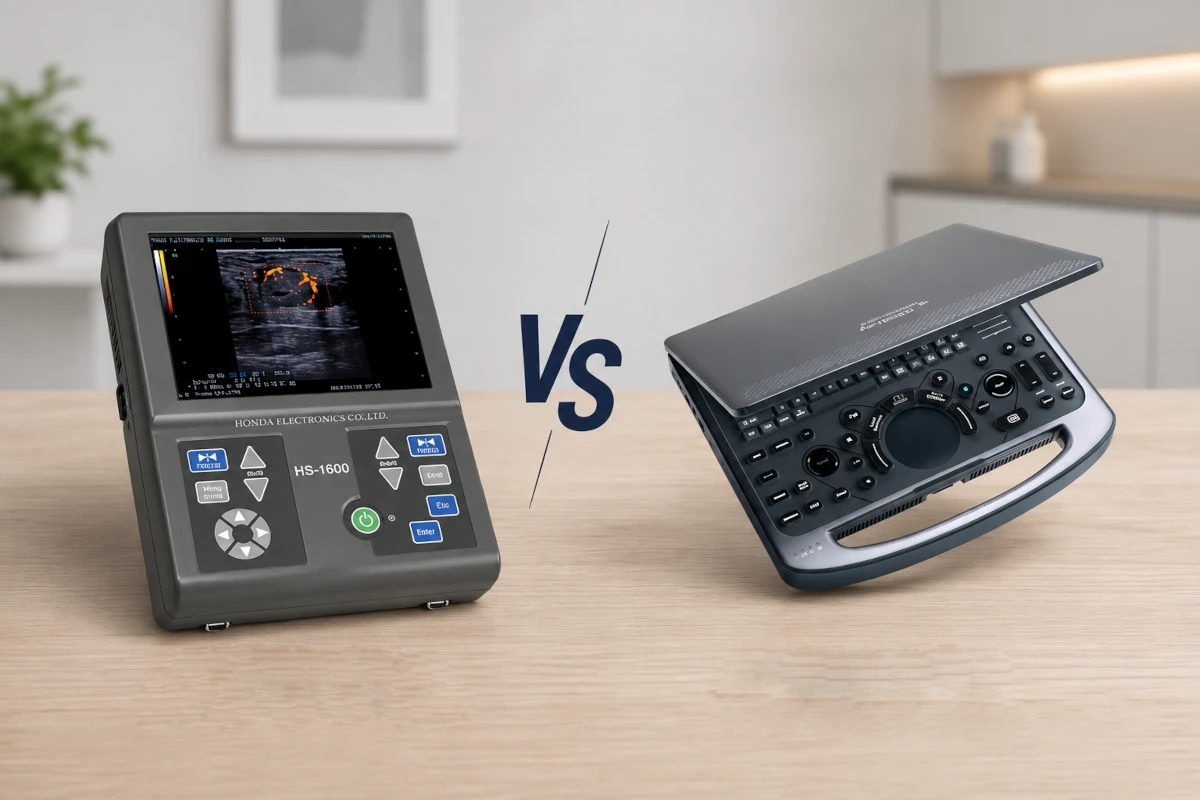
Honda’s HS-1600V continues to be a very practical portable choice, especially for equine, farm, and ambulatory work. Official Honda materials highlight its lightweight body, Doppler compatibility, battery and AC operation, high-brightness LCD, and outdoor-friendly visibility. The quoted battery runtime of about three hours and the focus on portability make it easy to see why this model remains relevant for vets working away from the clinic.
This is one of those machines that may not always dominate flashy “best of” lists, but it continues to make sense for veterinarians who value reliability, simplicity, and field usability.
What about cart-based systems?
Cart-based systems still offer the highest ceiling for image quality, workflow customization, and advanced applications. For hospitals, referral centers, and practices doing a large amount of abdominal imaging, cardiology, or specialty work, a cart system can still be the best long-term investment. Mindray’s broader veterinary lineup continues to position the Vetus family as part of that higher-performance end of the market, particularly for users who want more advanced tools and a more dedicated in-clinic setup.
For a blog post, it often helps to frame cart-based units less as “better for everyone” and more as “best when advanced diagnostics are part of your daily workflow.”
How to choose the right veterinary ultrasound system
The easiest way to narrow down your shortlist is to start with how and where you scan, and following a structured approach like this veterinarian’s guide to choosing the right ultrasound machine can help refine your decision further.
If you mainly do quick exams, emergency checks, or mobile work, a handheld unit like the Mindray TE Air series or Philips Lumify may be enough. If you need stronger all-around performance for small animal practice, mixed practice, or regular abdominal work, a portable system like the Vetus E7 or Honda HS-1600V may be a better fit. If your clinic handles advanced imaging, cardiac studies, or referral-level cases, a larger premium system is usually the smarter choice.
It is also worth remembering that the best machine is rarely the one with the longest feature list. It is the one your team will actually use confidently, consistently, and efficiently.
Conclusion
The best veterinary ultrasound systems in 2026 cover a wide range of needs rather than pointing to one universal winner. Mindray’s TE Air series is a strong option for handheld mobility, the Vetus E7 remains a compelling portable choice, Honda’s HS-1600V continues to make sense for field and equine use, and Philips’ CX50 still holds up as a premium compact platform. The right decision comes down to your patient mix, scanning environment, and how advanced your imaging needs really are.