Summary
The best ultrasound machine for small animal vets depends on image quality, probe options, Doppler features, workflow, budget, and service support. Dogs and cats often require abdominal, cardiac, soft tissue, reproductive, and guided-procedure imaging, so the right machine should match the clinic’s most common exams.
Introduction
Small animal vets do not all need the same ultrasound machine. A general practice may need a dependable system for abdominal scans, bladder checks, pregnancy confirmation, and soft tissue evaluation. A referral clinic may need stronger Doppler, cardiac tools, high-frequency probes, advanced imaging features, and better workflow for repeat exams.
Brands such as Mindray, Esaote, GE, Draminski, and Canon may all be considered depending on the clinic’s needs. Mindray offers dedicated veterinary ultrasound systems with both cart-based and portable options. Esaote lists veterinary systems for applications including small animal abdominal, MSK, and cardiology work. GE has a veterinary ultrasound portfolio that includes LOGIQ, Versana, VIVID, and portable solutions, while Draminski offers scanners for small animals and horses.
This guide explains what small animal vets should look for, which types of machines make sense, and how to approach choosing a system that fits daily clinic use.
Quick Buying Verdict
For most small animal clinics, the best ultrasound machine is not simply the most expensive system. It is the machine that gives clear abdominal images, supports the right probes, has an easy workflow, and can be serviced when needed.
A small animal vet should usually prioritise strong abdominal imaging, micro-convex and linear probe options, Doppler if cardiac or advanced work is needed, simple controls for daily use, reliable service support, and good probe condition if buying used or refurbished.
A premium system may be worth it for specialty clinics, but many general practices may be better served by a reliable mid-range veterinary system with the right probes. A clinic that mostly performs bladder checks and routine abdominal scans may not need the same machine as a referral hospital doing cardiac exams, exotic animal imaging, or guided biopsies.
What Small Animal Vets Actually Need From Ultrasound
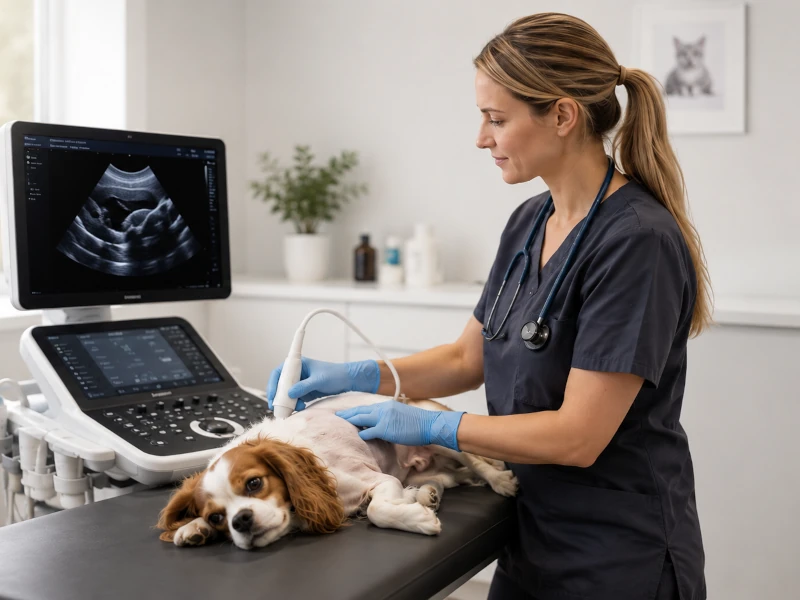
Small animal ultrasound is usually about answering practical diagnostic questions quickly and consistently. Dogs and cats may be scanned for vomiting, abdominal pain, bladder or urinary concerns, liver, kidney, spleen, intestinal changes, pregnancy checks, masses, fluid buildup, soft tissue swelling, and guided biopsies or fluid sampling.
Some clinics also perform echocardiography, which requires a different level of probe support, Doppler performance, and user skill. Others may only need general abdominal imaging and a simple workflow that multiple vets can use.
A small animal ultrasound machine should help the vet answer everyday diagnostic questions clearly, without slowing down the clinic. That means image quality matters, but so do probe handling, exam presets, image saving, cleaning, and service support.
The Three Machine Types Small Animal Vets Compare
Portable Veterinary Ultrasound Systems
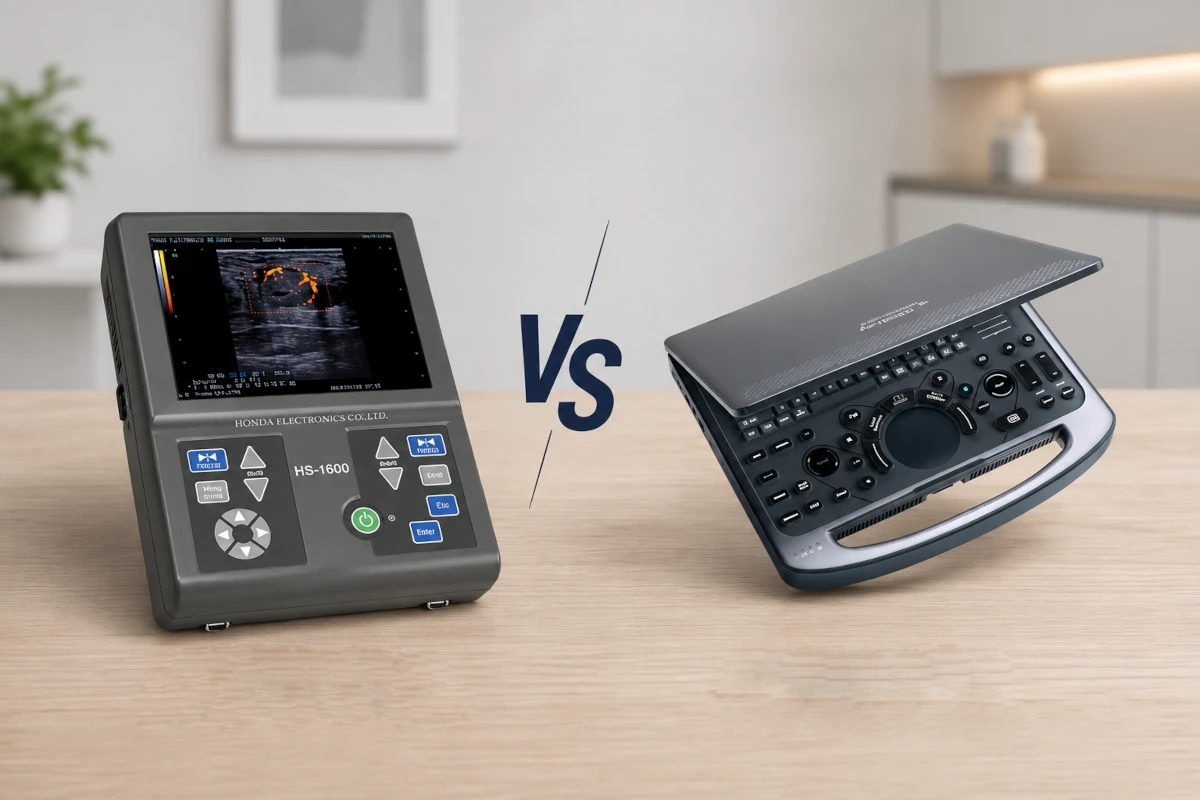
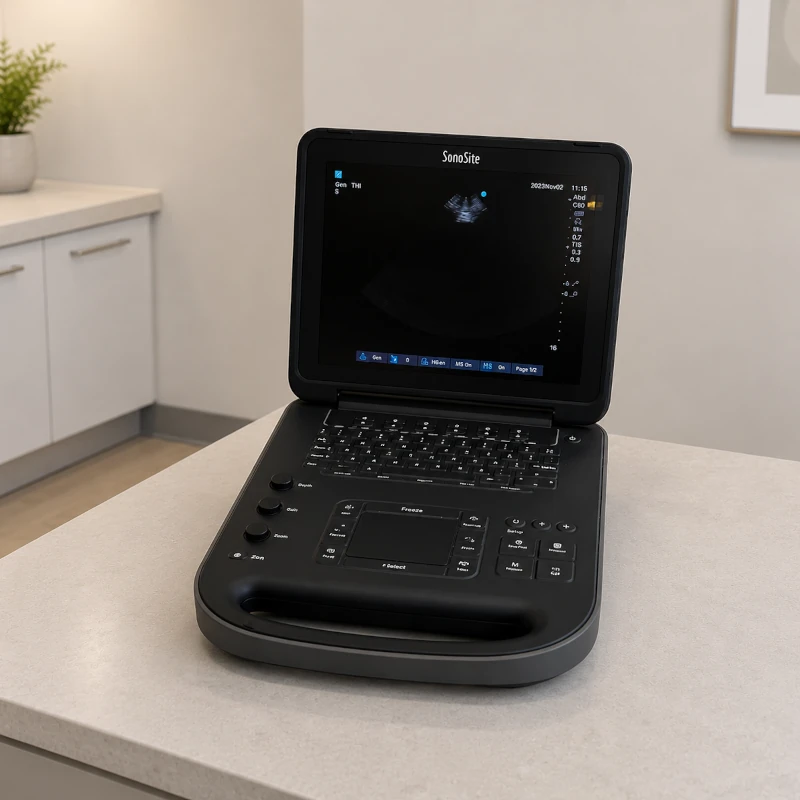
Portable systems are useful for clinics with limited space, mobile vets, or practices that move the machine between exam rooms. They can be a good fit for general abdominal imaging, soft tissue exams, bladder checks, and basic reproductive work.
Portable does not always mean basic. Some portable systems now offer strong imaging and Doppler features. However, buyers should compare screen size, probe compatibility, battery health, durability, and service support before choosing one. A portable system is only practical if it produces the images the clinic needs and can handle daily use.
Cart-Based Clinic Systems
Cart-based systems often make sense for clinics that scan frequently. They usually offer a larger screen, more stable workflow, better ergonomics, and easier use in a dedicated imaging room.
This type of machine may be a better fit for busy small animal clinics, multi-vet practices, regular abdominal ultrasound, and clinics that want stronger display quality and more comfortable scanning sessions. A cart-based system may also be easier to share between users because probes, controls, and accessories can stay organised in one place.
Advanced or Specialty Ultrasound Systems
Referral hospitals and specialty clinics may need more advanced systems for cardiology, exotic animal imaging, detailed abdominal work, soft tissue assessment, or guided procedures.
This is where brands such as Canon, GE, or higher-end veterinary systems may be considered. Canon has published an example of Aplio i800 use in exotic animal care, including abdominal and thoracic exams, ultrasound-guided biopsies, nerve blocks, and echocardiography. These systems may be more than a general practice needs, but they can be valuable when the clinic performs advanced imaging often.
The Best Probe Setup for Small Animal Vets
The probe package often matters more than the machine name. A strong ultrasound system with the wrong probes may not fit a small animal clinic at all.
A micro-convex probe is often useful for dog and cat abdominal exams because it can work well in smaller spaces and around curved anatomy. A linear probe is useful for superficial structures, vessels, soft tissue, tendons, and small parts. A convex probe may be useful for deeper abdominal imaging and larger dogs. A phased-array probe is important if the clinic performs cardiac ultrasound. A high-frequency probe can be useful for small patients, superficial anatomy, and exotic animals.
This is especially important when buying used or refurbished. A low-priced machine with damaged, missing, or mismatched probes can become expensive quickly.
Best-Fit Brands for Small Animal Clinics
Mindray veterinary ultrasound systems may be a strong fit for small animal and mixed practices because they include Vetus models built for animal imaging workflows. Mindray describes its veterinary ultrasound solutions as cart-based and portable systems designed for image quality, dedicated veterinary parameters, and user-friendly workflow.
Esaote may suit clinics that want veterinary-focused imaging with strong small animal, cardiology, musculoskeletal, and reproductive capabilities. Esaote’s MyLab EightVET page specifically references small animal abdominal, MSK, and cardiology applications, along with veterinary measurement packages.
GE may be worth considering for clinics that want broader medical imaging capability, especially advanced abdominal imaging, cardiovascular ultrasound, guided procedures, or premium refurbished systems. GE’s veterinary ultrasound portfolio includes LOGIQ, Versana, VIVID, and portable solutions for veterinary applications.
Draminski may fit clinics that want portable veterinary ultrasound for small animals and horses, especially when mobility and mixed-practice use matter. Draminski describes its small animal ultrasound machines as useful for point-of-care procedures such as AFAST and TFAST, as well as routine abdominal organ exams.
Canon may be more relevant for advanced small animal, referral, cardiac, or exotic animal imaging rather than basic first-system purchases. It may be especially interesting when a clinic needs high-resolution imaging, high-frequency probes, or specialist diagnostic capability.
What Makes a Machine Good for Dogs and Cats?
A good small animal ultrasound machine should provide clear abdominal image quality, good near-field detail, reliable Doppler if needed, comfortable probe handling, easy preset selection, fast image saving, simple cleaning between patients, good monitor visibility, and smooth workflow for repeat exams.
Image quality should be judged from test images on the exact machine, not only from brand reputation. A newer mid-range veterinary system with the right probes may be more useful than an older premium machine that lacks the correct software or transducers.
When to Choose a Higher-End System
A higher-end machine may be worth it if the clinic regularly performs echocardiography, advanced abdominal scans, referral imaging, guided biopsies, complex soft tissue exams, exotic animal imaging, or high-volume ultrasound appointments.
For a general clinic that only performs occasional bladder checks, pregnancy checks, or basic abdominal scans, a mid-range veterinary ultrasound system may be more practical. The goal is not to buy the most advanced machine available. The goal is to buy the system that supports the clinic’s real case mix.
Buying Used or Refurbished for a Small Animal Clinic
Used or refurbished ultrasound machines can be a good option for small animal vets if they are properly tested. This can allow a clinic to access better image quality or stronger features at a lower upfront cost.
Before buying, check the exact model and year, included probes, probe condition, sample images, software options, Doppler features, cardiac package if needed, service history, warranty or return policy, parts availability, and whether the machine fits daily small animal workflow.
A low-cost used system may not be a bargain if the probe is damaged, the software is limited, or the machine cannot be serviced easily.
Common Mistakes Small Animal Vets Should Avoid
Avoid buying based only on brand name. A good brand does not guarantee that the specific model, probe package, or software configuration fits your clinic.
Other common mistakes include choosing the cheapest system available, ignoring probe compatibility, buying without sample images, assuming every system supports Doppler, choosing a field scanner for advanced clinic imaging, buying a premium system without the training to use it, forgetting future probe repair costs, and overbuying features the clinic will rarely use.
The best purchase should match the exams performed every week, not just the features listed on a brochure.
Final Buying Advice
The best ultrasound machine for small animal vets should match the practice’s real case mix. A general clinic may need a dependable system for abdominal and soft tissue imaging, while a specialty clinic may need stronger Doppler, cardiac tools, advanced workflow, and high-frequency probes.
The best ultrasound machine for a small animal vet is the one that produces reliable images for everyday dog and cat exams, supports the right probes, fits the clinic workflow, and can be maintained long after purchase.
FAQ
What is the best ultrasound machine for small animal vets?
There is no single best ultrasound machine for every small animal vet. The best choice depends on the clinic’s exam types, budget, probe needs, Doppler requirements, workflow, and service support.
What probes do small animal vets need?
Many small animal vets use micro-convex, linear, convex, and phased-array probes for abdominal exams, superficial structures, soft tissue, deeper imaging, and cardiac exams.
Is portable ultrasound good for small animal vets?
Yes, portable ultrasound can be a good option for small animal vets, especially clinics with limited space or practices that move equipment between rooms. Buyers should still check image quality, probe options, Doppler features, and support.
Should small animal vets buy new or used ultrasound equipment?
Both can make sense. New systems may offer the latest warranty and features, while used or refurbished systems can reduce cost if they are properly tested and include suitable probes.
Is Doppler necessary for small animal ultrasound?
Doppler is not always necessary for basic abdominal exams, but it can be important for cardiac, vascular, reproductive, and more advanced diagnostic work.
What brands are good for small animal veterinary ultrasound?
Mindray, Esaote, GE, Draminski, Canon, and other brands may be suitable depending on the clinic’s needs. The specific model, probe package, condition, and support matter more than the brand name alone.
What should I check before buying a used small animal ultrasound machine?
Check the machine model, included probes, probe condition, image quality, software options, Doppler features, service history, warranty, and availability of replacement probes or parts.