Summary
The best portable ultrasound machine for mobile vets depends on where they scan, which animals they treat, and what exams they perform most often. Buyers should compare image quality, battery life, probe options, weight, durability, screen visibility, Doppler features, cleaning, and service support before choosing a new, used, or refurbished system.
Introduction
Mobile vets need more from an ultrasound machine than basic portability. The system may need to work in homes, vans, barns, stables, farms, shelters, and small treatment rooms where space, lighting, power access, and patient handling are not always predictable.
That means a portable ultrasound machine should not just be small. It should be easy to carry, quick to start, durable enough for travel, simple to clean, and compatible with the probes needed for daily mobile work.
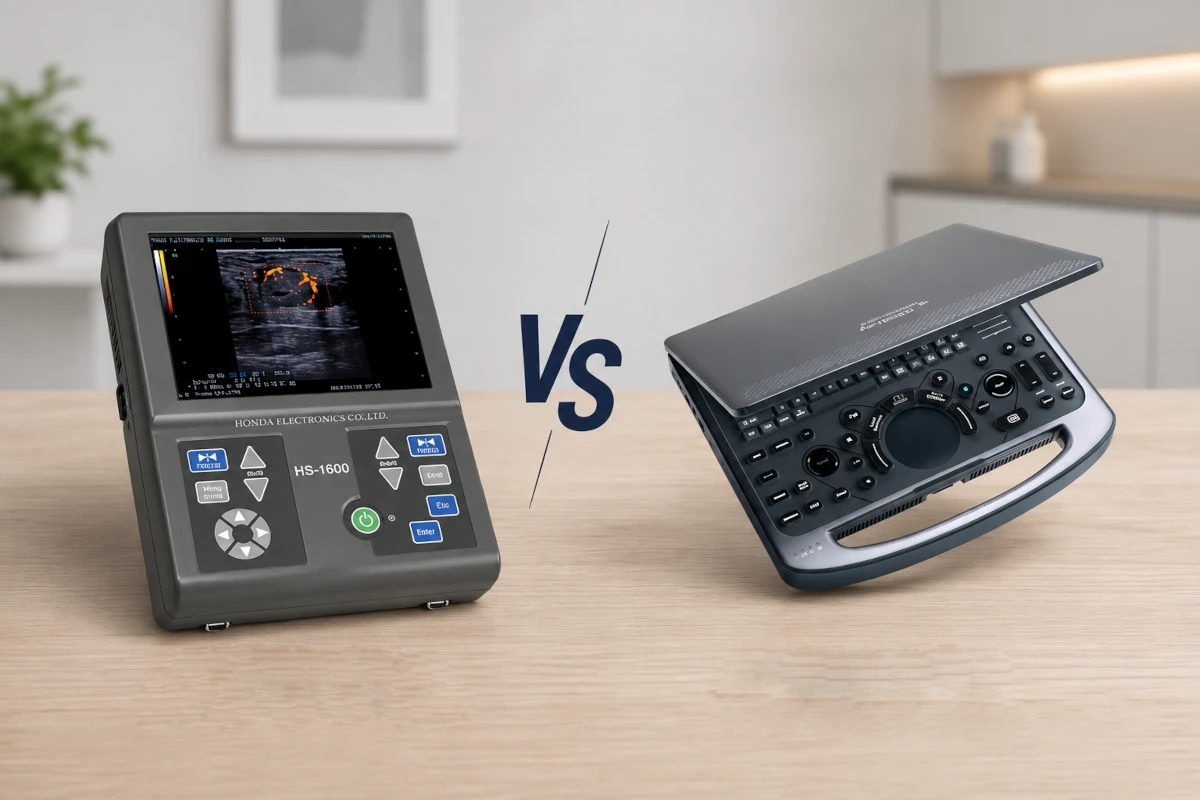
Brands such as Mindray, Draminski, Esaote, and IMV Imaging all offer portable or veterinary-focused ultrasound options. Mindray lists the Vetus E7 as a hand-carried veterinary ultrasound system. Draminski offers portable scanners for small animals and horses, as well as wireless probes that can connect to mobile devices or goggles. Esaote offers portable veterinary systems such as MyLab OmegaVET and MyLab X1 Go VET, while IMV Imaging supplies ultrasound scanners for small animal, equine, and farm markets.
This guide explains what mobile vets should look for, which machine styles make sense, and how to choose a system that is practical outside a fixed clinic.
Quick Verdict: What Mobile Vets Should Prioritize
For mobile vets, the best portable ultrasound machine is not always the smallest one. It is the system that gives reliable images, supports the right probes, starts quickly, travels safely, and can handle daily use away from a controlled clinic environment.
The main priorities should be lightweight design without sacrificing image quality, strong battery life, fast startup, easy probe changes, good screen visibility, durable cables and connectors, easy cleaning between patients, reliable service support, and a carrying case or transport setup.
A portable ultrasound machine should make mobile work easier, not add another fragile piece of equipment to worry about. A system that looks impressive in a clinic may not be the best option if it is difficult to transport, slow to set up, or hard to use in bright barns, tight rooms, or field conditions.
Start With Your Mobile Workflow
House-Call Small Animal Vets
House-call small animal vets may need a compact system for abdominal checks, bladder evaluation, pregnancy confirmation, soft tissue concerns, and basic guided procedures. These exams may happen in a living room, treatment van, shelter room, or small workspace.
For this type of mobile work, quiet operation, quick setup, and easy cleaning matter. The system should also be simple enough to use without a full clinic team helping with positioning, cables, and patient handling.
Equine and Stable-Side Vets
Equine vets may need ultrasound for reproductive work, tendon and ligament exams, soft tissue swelling, and follow-up injury checks. In this setting, portability is only one part of the decision.
Battery life, linear and rectal probe options, screen visibility in barns, durable probe cables, and easy carrying between locations are all important. A system used for stable-side exams should be judged by how it performs in real equine environments, not only by its brochure specifications.
Farm and Livestock Mobile Vets
Farm vets may use portable ultrasound for pregnancy checks, reproductive management, fertility work, and herd planning. High-volume scanning requires a machine that is fast, durable, and practical in chutes, barns, and outdoor environments.
For livestock work, the probe package and battery performance may matter more than advanced software. A machine that is easy to clean, easy to carry, and reliable through a long farm visit is often more useful than a system with features the vet rarely uses.
Mixed-Practice Mobile Vets
Mixed-practice mobile vets need the most flexibility. They may scan dogs and cats in the morning, horses in the afternoon, and cattle or goats on another call.
For these buyers, the key is choosing a system with the right probe package, not just a good machine body. One portable ultrasound unit may be suitable for mixed work only if it supports the transducers needed across small animal, equine, and livestock exams.
Portable Does Not Mean One Type of Machine
Laptop-Style Portable Systems
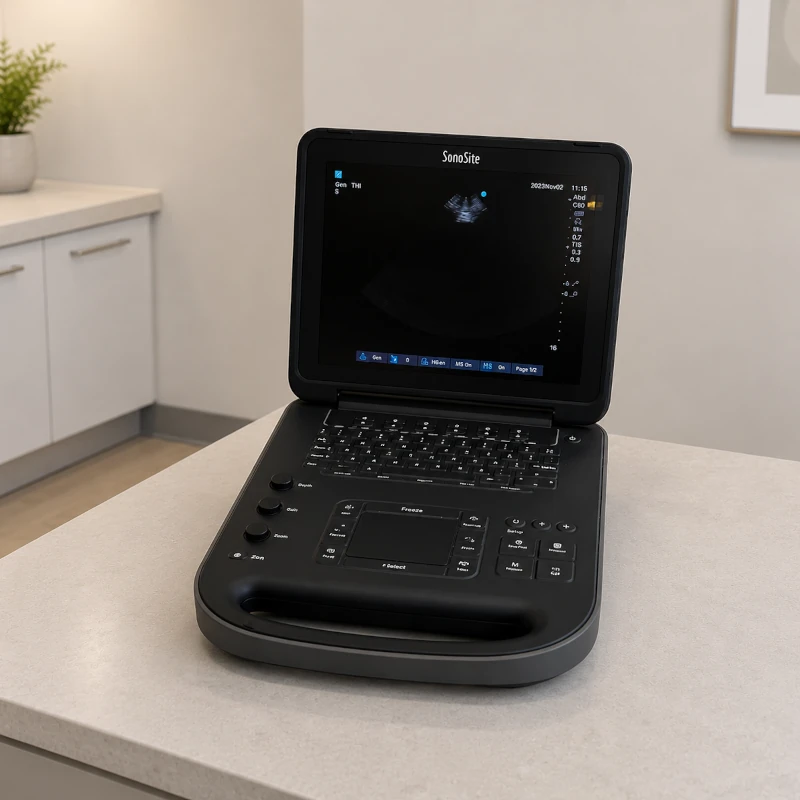
Laptop-style portable systems are usually a strong fit for mobile vets who want a balance of image quality, screen size, and familiar controls. They may be useful for small animal, equine, and mixed-practice work.
These systems are often better for vets who need more than a basic handheld scanner. They can offer a more complete interface, broader probe options, and better display size, while still being portable enough for mobile clinics, house calls, and flexible practice settings.
Handheld and Wireless Ultrasound
Handheld or wireless probes can be useful for quick checks, tight spaces, and vets who need maximum mobility. They can also reduce the amount of equipment carried between locations.
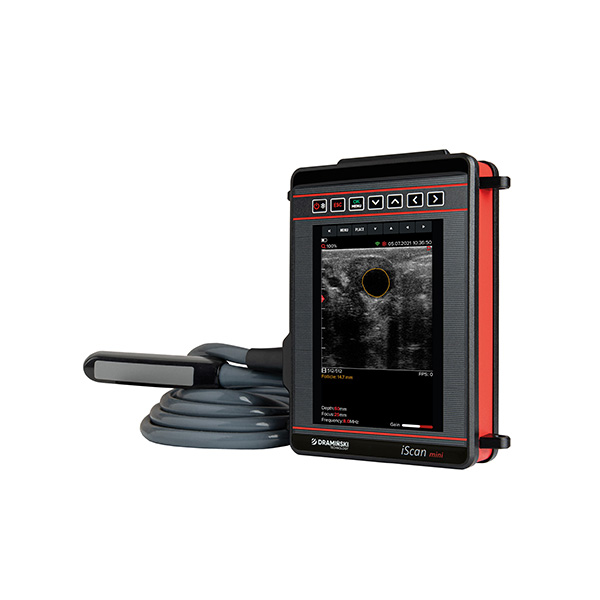
However, buyers should compare image quality, battery life, app workflow, data storage, probe options, and whether the system is suitable for their clinical needs. Draminski, for example, describes wireless veterinary probes that connect to mobile devices and support mobile image storage through its app workflow.
Compact Premium Portable Systems
Compact premium portable systems may be better for vets who need stronger imaging performance but still want portability. Esaote positions MyLab OmegaVET as a premium portable veterinary scanner designed to be easy to carry and support high diagnostic efficiency.
These systems may be a better fit for mobile specialists, advanced small animal imaging, equine diagnostics, or clinics that want portable performance closer to a larger system.
Brands Mobile Vets Often Compare
Mindray portable veterinary systems may suit mobile vets who want a dedicated veterinary portable system with a familiar ultrasound workflow. Its Vetus E7 is listed as a hand-carried veterinary ultrasound system, making it relevant for mobile and flexible veterinary settings.
Draminski portable veterinary ultrasound systems may be a strong fit for vets who need field-friendly veterinary ultrasound. Draminski says its veterinary range includes scanners for small animals and horses, and also offers wireless probes that connect to mobile devices or goggles for greater mobility.
Esaote may suit mobile vets who want higher-end portable imaging. Esaote lists portable veterinary systems including MyLab OmegaVET and MyLab X1 Go VET, with MyLab X1 Go VET described as an ultra-slim system for fast, reliable, mobile veterinary diagnostics.
IMV Imaging may be useful for mobile vets who work across small animal, equine, and farm markets. IMV Imaging describes its veterinary ultrasound range as covering small animal, equine, and farm needs.
The Probe Package Is More Important Than the Logo
A mobile vet can buy a good portable machine and still be disappointed if the probes do not fit daily work. The machine body matters, but the transducers decide what the vet can actually scan.
Micro-convex, linear, convex, and rectal probes can all matter for mobile vets, depending on whether they scan small animals, tendons, deeper anatomy, equine patients, or livestock. A linear probe is useful for tendons, superficial tissues, vessels, and soft tissue masses. A convex probe can help with deeper abdominal or reproductive exams. A rectal probe is important for equine or livestock reproductive work. A phased-array probe is needed if cardiac exams are part of the service. Doppler-capable probes may be useful for blood flow, cardiac, vascular, and some reproductive evaluations.
A used portable ultrasound machine with weak probes, damaged cables, or limited compatibility may cost more long-term than a better-tested system with the right probe setup.
Review the Machine Like Travel Equipment
A mobile ultrasound machine should be judged by how it performs during a real workday, not only by its imaging specifications.
Ask how easy it is to carry, whether it fits safely in a vehicle, how quickly it starts, and whether the battery lasts between calls. Check whether the screen can be seen in bright or awkward lighting, whether the controls are simple when working alone, and whether cables are protected during travel.
Cleaning also matters. A mobile system may move between homes, barns, farms, shelters, and clinics in the same day, so the machine and probes should be easy to disinfect. Image saving and export should also be simple, especially when records need to be shared with a clinic or client.
For mobile vets, reliability between appointments can matter just as much as image quality during the scan.
When a Higher-End Portable System Is Worth It
Not every mobile vet needs a premium system. However, higher-end portable ultrasound may be worth the investment if the practice offers advanced abdominal imaging, echocardiography, equine tendon and ligament exams, reproductive services, guided procedures, exotic animal imaging, high-volume ultrasound appointments, or specialist mobile imaging.
Advanced features only matter when they are used regularly. A vet performing mostly basic bladder checks or pregnancy confirmations may not need the same system as a mobile specialist performing advanced cardiac or abdominal exams.
Buying Used or Refurbished Portable Ultrasound
Used or refurbished portable ultrasound machines can be a smart option for mobile vets, but they need careful checking. Portable units often experience more movement, transport, battery wear, and cable stress than clinic-only systems.
Buyers should check the exact model and age, included probes, probe lens condition, cable wear, connector condition, battery health, charger and accessories, screen condition, image quality, Doppler and software options, service history, warranty or return policy, and availability of replacement probes and parts.
A low purchase price is not always a good deal if the battery is weak, the probe is damaged, or the system cannot be serviced easily.
Common Mistakes Mobile Vets Should Avoid
Common mistakes include choosing the smallest machine without checking image quality, buying before confirming probe needs, forgetting battery health, assuming every portable system includes Doppler, ignoring screen visibility outdoors, and buying without test images.
Other mistakes include not checking transport protection, choosing a field scanner for advanced clinic-style imaging, choosing a premium system without needing its advanced features, and forgetting service, repair, and replacement probe availability.
The best purchase is the one that supports the mobile vet’s real cases, not just the one with the most attractive size or price.
Final Buying Advice
The best portable ultrasound machine for mobile vets depends on the animals treated, the scan environment, and the services offered. A house-call small animal vet may need a different setup from an equine vet, livestock vet, or mixed-practice mobile service.
The best portable ultrasound machine for a mobile vet is one that travels well, scans reliably, supports the right probes, fits the daily workflow, and can be serviced when the practice depends on it.
FAQ
What is the best portable ultrasound machine for mobile vets?
There is no single best portable ultrasound machine for every mobile vet. The best choice depends on the animals scanned, exam types, probe needs, battery life, image quality, budget, and service support.
What should mobile vets look for in a portable ultrasound machine?
Mobile vets should look for good image quality, long battery life, suitable probes, durable cables, easy cleaning, screen visibility, fast startup, transport protection, and reliable service support.
Are handheld ultrasound machines good for mobile vets?
Handheld ultrasound machines can be useful for quick checks and highly mobile work, but buyers should compare image quality, probe options, battery life, data storage, and whether the system is suitable for their clinical needs.
What probes do mobile vets need?
Many mobile vets need a micro-convex probe for small animal abdominal exams, a linear probe for superficial structures and tendons, a convex probe for deeper imaging, and a rectal probe for equine or livestock reproductive work.
Is Doppler necessary for mobile veterinary ultrasound?
Doppler is not always necessary for basic abdominal or pregnancy checks, but it can be important for cardiac, vascular, reproductive, and more advanced diagnostic work.
Is a used portable ultrasound machine worth buying?
Yes, a used portable ultrasound machine can be worth buying if it has been tested and includes suitable probes, strong battery health, working software, clear image quality, and reliable seller support.
Which brands make portable ultrasound machines for mobile vets?
Brands mobile vets may compare include Mindray, Draminski, Esaote, IMV Imaging, SonoSite, Honda, GE, and others. The best choice depends on the exact model, probe package, condition, and support.