Summary
Ultrasound systems are complex pieces of equipment made up of probes, circuit boards, power supplies, keyboards, displays, and many other parts. When one component wears out, replacing only that part can extend the life of the entire machine and avoid costly downtime.
However, buyers should confirm that any replacement part is compatible with their system, has been properly tested, comes with a warranty and clear return policy, and is supported by a reputable supplier before purchasing. Paying careful attention to probes, software compatibility, and installation requirements helps ensure the part will restore imaging performance rather than cause new problems.
Introduction
Modern ultrasound machines deliver real-time images that help clinicians diagnose patients and veterinarians monitor animal health, but like all technology they eventually require maintenance. Power supplies can fail, circuit boards and fans may wear out, keyboards or trackballs can stick, and probes can crack or develop signal dropout lines.
Clinics and animal hospitals often look for replacement parts to keep their systems running instead of purchasing entirely new machines. Yet buying the right part is not simply a matter of finding the lowest price.
Replacement components must be compatible with the specific model and software version, arrive in good condition, and, in many cases, be installed by a trained technician. This guide explains which parts are commonly replaced, how to verify compatibility, and what to look for in a part supplier.
Common Ultrasound Replacement Parts
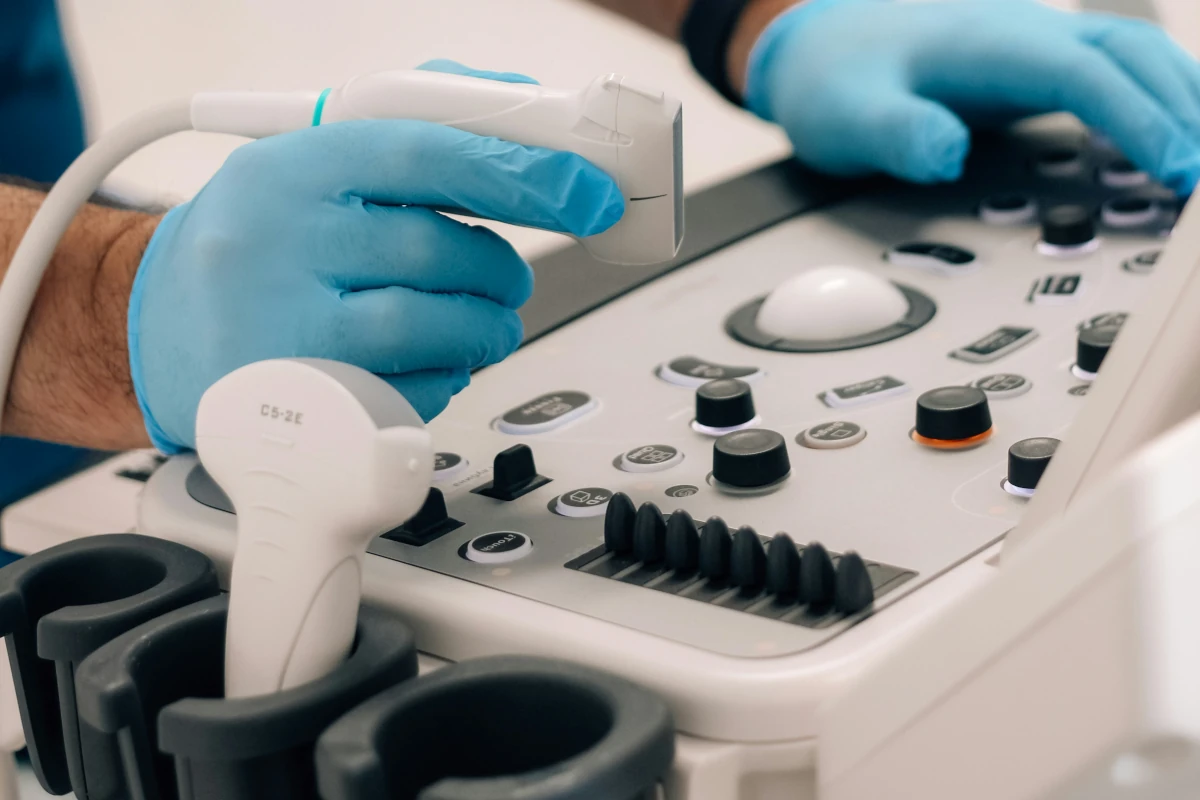
Ultrasound systems contain many components that may need replacement over time. Probes, or transducers, are often replaced because they are regularly handled, cleaned, and accidentally dropped. Cracks in the housing or lens can cause noise or lines in the image.
Probe cables and connectors are another frequent issue. Cables can be damaged by being run over or bent, and connectors may develop worn or broken pins.
Other common parts include:
- Power supplies and batteries: failing power supplies or worn batteries in portable units can prevent the machine from powering on.
- Control panels, keyboards, and trackballs: keys or trackballs can become unresponsive after heavy use.
- Monitors and displays: older LCDs may dim or fail; in some cases the entire display needs replacement.
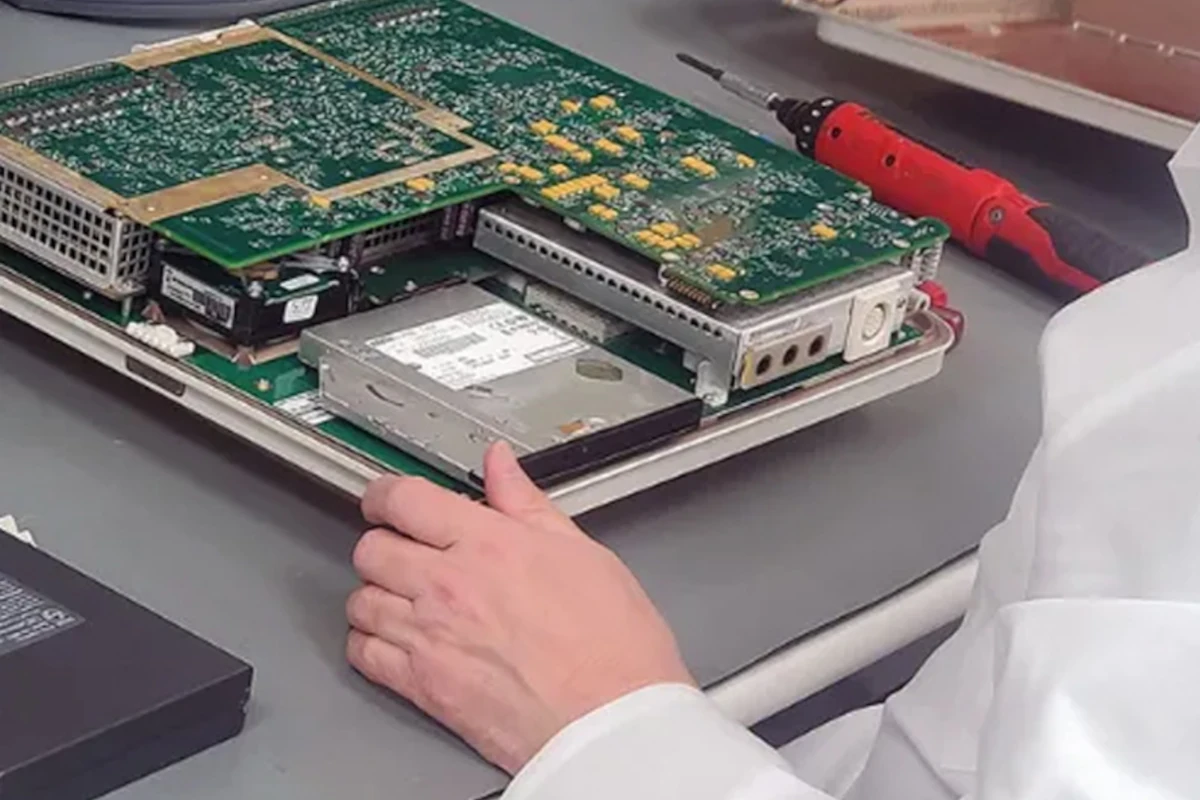
- Circuit boards and PCBs: boards responsible for beamforming, image processing, or system control can fail and must be replaced with the correct revision.
- Hard drives or storage components: used to store patient data or imaging presets; these may wear out and require swapping.
- Mechanical parts like wheels, brakes, and cart components: worn casters or broken brakes make moving the machine difficult.
- Cooling fans and vents: clogged or failing fans can cause overheating.
A reliable parts supplier should be able to identify and supply these components and verify that they function properly before shipping.
Know Your Ultrasound System Before Buying Parts
Not all ultrasound machines are the same. Even within a single manufacturer’s product line, there may be multiple revisions with different hardware levels or connectors.
Before ordering any replacement part, buyers should document the machine’s manufacturer, model name, serial number, software version, hardware level, and part number. For example, a circuit board designed for one revision may have the same part number as another but not be compatible with a newer hardware level.
The board revision or connector style must match exactly. A reputable parts provider can help identify the correct part by cross-checking model and revision information.
For probes, always consult the machine’s probe compatibility list. Some systems use proprietary connectors, so buying a transducer with the wrong connector or frequency range may result in poor image quality or a connector that cannot be inserted.
Confirming the machine’s configuration before purchase prevents wasted time and shipping costs.
OEM vs Aftermarket vs Refurbished Parts
Replacement parts generally fall into three categories: OEM (original equipment manufacturer), aftermarket, and refurbished or reconditioned.
OEM parts are manufactured by the original system builder. They are built to the same specifications as the original components and must meet regulatory quality requirements.
Their advantages include strong compatibility and reliability, and OEM warranties sometimes cover both the part and installation. The main disadvantages are higher cost and potential supply-chain delays.
Aftermarket parts are produced by third-party suppliers. They can be more affordable and may be the only option for older systems whose OEM parts are no longer manufactured.
However, quality varies. Some suppliers follow rigorous quality processes, while others may cut corners. Aftermarket parts may also lack full documentation or warranty support.Buyers should research the reputation of the manufacturer and ensure the part has been tested and is labeled for the intended use.
Refurbished or reconditioned parts are previously used components that have been inspected, tested, and restored for resale. Reputable refurbishers replace worn components and verify performance before shipping.
They often provide a warranty and can be a cost-effective alternative to new parts. As with used equipment, the level of refurbishment can vary, so always ask for documentation of testing and what was replaced or repaired.
Choosing between these options depends on budget, system age, and risk tolerance. For a critical system used daily in a hospital, OEM or high-quality refurbished parts may make sense. For an older secondary machine or veterinary clinic, carefully sourced aftermarket parts could be a practical choice.
Check Compatibility Before Purchase
Compatibility is one of the biggest challenges in buying ultrasound replacement parts. A part may look identical but still be incompatible because of differences in connectors, firmware, or hardware revisions.
Always confirm:
- Exact model and hardware revision: check the part number and revision level printed on the defective part and match it to the replacement.
- Connector type and pin configuration: especially for probes and cables; mismatched connectors can damage both the machine and the part.
- Software requirements: some boards require specific firmware or software versions; ensure your system’s software is supported.
- Voltage or power specifications: power supplies and batteries must match the system’s requirements.
- Probe support: confirm that the replacement will support the intended probes and imaging modes.
- Regional or language settings: if buying from another country, check that the part’s firmware supports your region.
- Installation instructions: verify whether the part can be installed without specialized tools or if a service technician is required.
A good supplier should provide this information before purchase. When in doubt, ask for sample images or test results demonstrating the part’s functionality.
Pay Special Attention to Ultrasound Probes
Probes are among the most critical and expensive components of an ultrasound machine. They convert electrical signals into sound waves and back again, so any defect significantly impacts image quality.
LBN Medical describes several common probe failures, including cracks in the housing or lens from dropping or hitting the probe, as well as damage to the cable or crystals. Damaged cables may cause intermittent loss of signal or lines across the image.
Cracks in the lens can allow fluid ingress or create artifacts. In some cases, individual crystals inside the probe may fail, resulting in dropout lines or inconsistent image brightness.
When purchasing a probe:
- Check the model and type, such as linear, convex, or phased array, and ensure it matches your system and exam type.
- Inspect the cable for cuts, swelling, or exposed wires. Run your fingers along the cable to feel for soft spots or bulges that may indicate internal damage.
- Examine the lens for cracks, discoloration, or wear. Scratches or opaque areas reduce image clarity.
- Look for connector damage. Bent or missing pins can prevent a secure connection or cause intermittent loss of signal.
- Request test images or an ultrasound report to confirm there are no dropouts or artifacts across the field of view.
- Ask whether the probe has undergone repair or replacement of its cable or crystals and whether this work was completed by a qualified technician.
Because probes are so important, it may be wise to buy them from suppliers who specialize in probe repair and can provide warranties. Probes that have been cleaned and tested by certified technicians and delivered with a test report give more confidence than those sold as-is.
New, Used, or Refurbished Parts?
The decision to buy new, used, or refurbished components depends on availability, budget, and how critical the system is.
New parts provide the highest assurance of quality and longevity, but they come at the highest price. Used parts may be inexpensive, but condition can vary widely.
If you purchase used components, verify that the seller has tested them and provides a return policy. Poorly documented used parts may have hidden issues or missing accessories.
Refurbished parts offer a middle ground. They are inspected and restored, and often include a limited warranty.
According to a guide on buying pre-owned medical devices, buyers should choose certified vendors, request documentation such as performance tests and service history, understand the warranty terms, and verify compatibility before purchasing.
For older systems whose manufacturers no longer supply parts, refurbished or aftermarket parts may be the only option. In such cases, select suppliers that follow rigorous quality processes and provide clear documentation.
Warranty, Testing, and Return Policy
A replacement part should come with some form of protection. Ask the supplier:
- Has the part been tested? For probes, ask for test images or a report. For circuit boards or power supplies, ask if they were installed in a system and verified for functionality.
- Is there a warranty? Understand what the warranty covers, whether parts only or parts and labor, and how long it lasts. OEM parts often come with longer warranties, while third-party suppliers may offer shorter coverage.
- Return policy: confirm that you can return the part if it is incompatible or arrives damaged. Some sellers provide a limited period to test the part and send it back if necessary. Avoid sellers who refuse returns or offer no protection for DOA (dead on arrival) parts.
- Installation support: find out whether the supplier offers remote support or step-by-step guidance for replacement. Solutech’s remote diagnostics service, for example, provides fast problem identification and installation guidance along with expert support to reduce downtime.
Suppliers who answer these questions clearly and provide documentation inspire more confidence than those who cannot.
Installation and Service Requirements
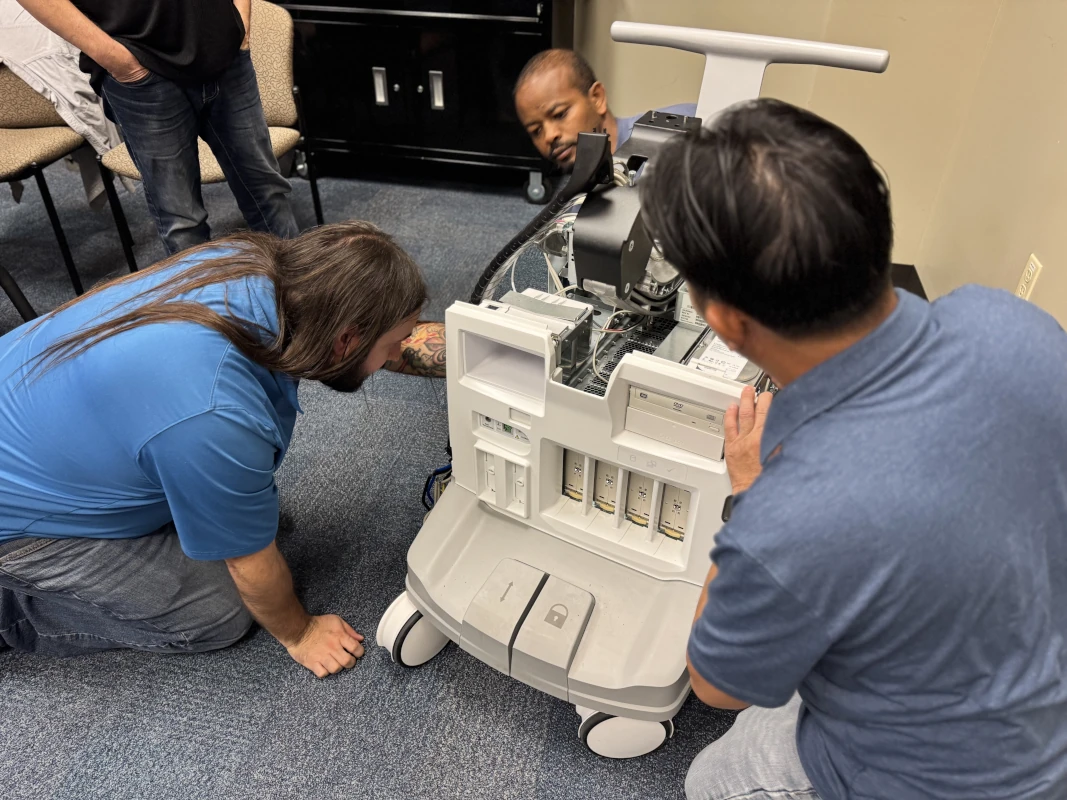
Some components, like external batteries or wheels, can be replaced easily by clinic staff. Others, such as power supplies, internal circuit boards, or software components, require specialized tools and knowledge.
Installing these parts incorrectly can damage the machine or void its warranty. Service providers such as Solutech emphasize the value of trained technicians, offering remote diagnostics and training courses so staff can learn proper assembly and disassembly techniques.
When in doubt, arrange for a trained service engineer to perform the installation or at least supervise the process. This helps ensure that the machine meets safety and performance standards after the repair.
Red Flags When Buying Ultrasound Parts
Be cautious of sellers who:
- Cannot provide a part number or compatibility confirmation.
- Offer no testing information or documentation.
- Do not provide a warranty or return policy.
- Have poor-quality photos or stock images instead of the actual part.
- Offer prices that are too good to be true relative to other sources.
- Provide no details on probe condition or image quality.
- Cannot answer basic technical questions about the part or system.
- Offer as-is sales with no support or after-sale service.
If a listing triggers several of these warnings, look for a more reputable source.
How Replacement Parts Support Preventive Maintenance
Replacing worn components is not just about reacting to failures. It is also a key part of preventive ultrasound maintenance.
Routine replacement of probe cables, batteries, cooling fans, and other wear items reduces the risk of sudden breakdowns. LBN Medical recommends protecting probes from drops and using proper cleaning practices to extend their lifespan to five to seven years.
Replacing damaged cables or lenses early helps maintain image quality and protects patients from incorrect diagnoses. Similarly, replacing failing fans or power supplies before they fail completely prevents overheating and protects more expensive components.
Partnering with service providers who offer regular maintenance and parts supply can extend the life of your ultrasound system and reduce downtime.
Conclusion
Ultrasound replacement parts can prolong the life of imaging equipment and keep clinics and veterinary practices running smoothly. Probes, power supplies, circuit boards, keyboards, monitors, and cables are all common components that may need replacement.
Choosing the right parts requires careful attention to compatibility, part condition, supplier reputation, and after-sale support. Buyers should note the machine’s model, hardware level, and part numbers, compare OEM, aftermarket, and refurbished options, and verify testing and warranties.
Finding sellers who provide documentation, testing, and installation support will reduce the risk of incompatibility or unexpected failures. With thoughtful selection and preventive maintenance, replacement parts can be a cost-effective way to maintain reliable diagnostic imaging.
FAQ
What are the most common ultrasound replacement parts?
Common parts include probes, probe cables and connectors, power supplies, batteries, monitors, keyboards, trackballs, circuit boards, cart components, cooling fans, and connectors.
How do I know if a replacement part is compatible?
Check your system’s manufacturer, model, serial number, hardware revision, and software version. Match the part number and connector type exactly and consult compatibility lists.
Are used ultrasound replacement parts safe to buy?
Used parts can be safe if they are properly tested, come from a reputable supplier, include documentation, and offer a return policy. Avoid parts sold as-is with no warranty or testing.
What is the difference between OEM and aftermarket ultrasound parts?
OEM parts are made by the original manufacturer and designed to meet strict quality standards, while aftermarket parts are produced by third-party suppliers. Aftermarket parts can be more affordable, but quality and compatibility may vary.
Are refurbished ultrasound parts worth buying?
Yes, refurbished parts that have been tested, repaired, and backed by a warranty can be a cost-effective alternative to new parts.
Can I replace ultrasound parts myself?
Some external parts like batteries or cart components may be simple to replace. Internal components such as circuit boards and power supplies often require specialized tools and expertise, and incorrect installation may damage the machine. Seek help from a trained technician or remote service provider.
Why are ultrasound probes so expensive to replace?
Probes contain delicate acoustic crystals, shielding, cables, and connectors. They directly affect image quality and patient safety, so manufacturing them requires high precision and quality control.
What should I ask before buying ultrasound replacement parts?
Ask about compatibility, part number, testing, warranty, return policy, installation requirements, and whether support or test images are available.