
Summary
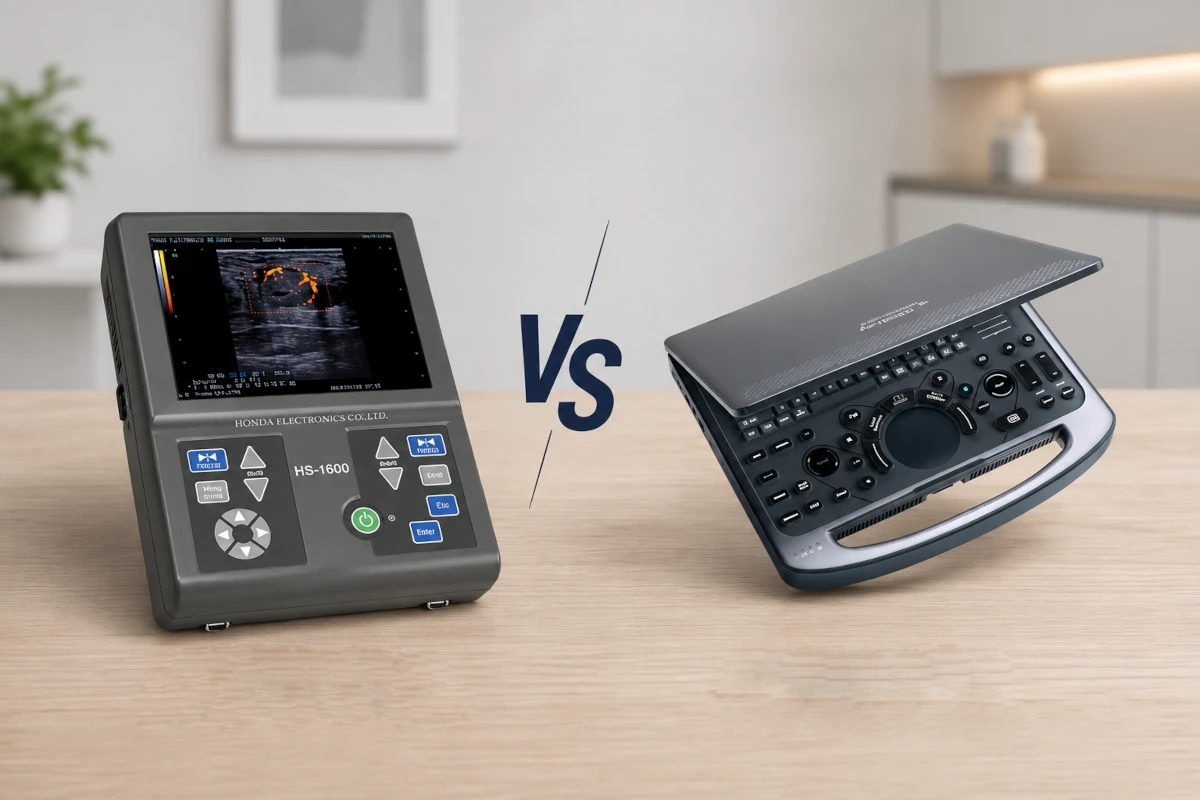
Veterinary ultrasound machines can cost anywhere from a few thousand dollars to well over $30,000, depending on the type of system, the image quality, and the features included. Handheld units for quick checks or field work are usually the most affordable, portable laptop-style systems sit in the middle, and premium cart-based machines are the most expensive. Understanding these price ranges makes it much easier to choose a machine that fits both your clinical needs and your budget.
Introduction
Ultrasound has become a standard tool in modern veterinary medicine. It is used for everything from pregnancy checks in cattle to abdominal imaging in dogs and cardiac exams in horses. The challenge is that there is a huge range of machines on the market, and pricing can vary just as widely.
A mobile bovine vet will not need the same kind of system as a referral hospital or a small animal clinic doing more advanced imaging. That is why it helps to look at ultrasound pricing in categories rather than trying to pin down one single number.
This guide breaks down the typical cost of veterinary ultrasound machines, explains what drives the price up or down, and highlights the trade-offs between handheld, portable, and cart-based systems.
Average Cost of a Veterinary Ultrasound Machine
In general, veterinary ultrasound systems fall into three main price brackets.
Handheld or wireless probes usually cost around US$2,000 to US$8,000. These are best for quick scans, mobile work, and basic reproductive or emergency exams.
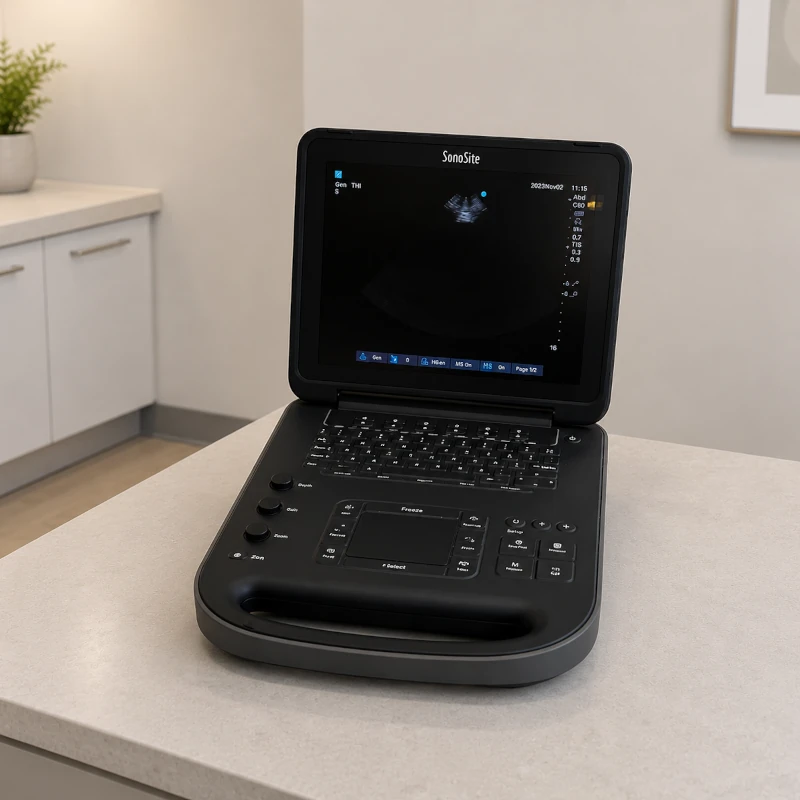
Portable veterinary ultrasound machines usually fall in the US$5,000 to US$20,000 range. These are popular in mixed practices, equine work, and small animal clinics that want a balance between mobility and imaging capability.
Cart-based systems usually start around US$20,000 and can easily go beyond US$30,000 to US$40,000 or more. These are typically used in hospitals, referral centers, and practices that need the highest image quality and more advanced features.
Refurbished machines can cost less than new ones, sometimes significantly less, but the trade-off is usually older technology, shorter warranty coverage, or more uncertainty around long-term support.
Handheld Veterinary Ultrasound Prices
Handheld portable ultrasound devices are usually the lowest-cost entry point.
These are compact scanners that connect to a smartphone or tablet and are mainly designed for quick exams, triage, reproductive work, or mobile use. Basic handheld models may start around US$2,000, while more advanced options with features like Doppler or app-based tools often fall between US$3,500 and US$5,000 or more.
The price depends on several things, including whether the device is wireless, whether it offers color Doppler, the type of probe design, battery life, and whether there are subscription fees attached to the software.
Handheld systems make the most sense for mobile vets, quick field diagnostics, emergency checks, or practices that want a backup machine without spending heavily.
Portable Veterinary Ultrasound Prices
Portable laptop-style systems sit in the middle of the market and are often the most practical option for many veterinary practices.
Entry-level portable machines often start around US$5,000 to US$8,000. Mid-range models with better image quality, color Doppler, and stronger general performance often fall between US$10,000 and US$15,000. More advanced portable units with cardiac packages, multiple probe support, and more specialized software can reach US$18,000 to US$25,000.
The price goes up with features like:
- Color and power Doppler
- Higher-resolution displays
- Multiple probe ports
- Cardiac software packages
- Touchscreen controls
- Automatic measurement tools
- Longer battery life or rugged design for field use
These systems are often the best fit for mixed practices, equine work, livestock reproduction, and small animal clinics that scan regularly but do not need a full premium cart system.
Cart-Based Veterinary Ultrasound Prices
Cart-based machines are the highest-end category and usually come with the highest price tag.
These systems are built for practices that need better image quality, stronger workflow tools, and more advanced diagnostic features. A general veterinary cart-based system often starts around US$20,000 to US$25,000, while more advanced setups can go beyond US$40,000, especially when premium probes, cardiology packages, or 3D and 4D capabilities are involved.
They cost more because they usually offer:
- Better image quality
- More advanced Doppler modes
- Larger monitors
- More probe ports
- More complete software packages
- Improved ergonomics for long-term daily use
These systems are usually best for veterinary hospitals, referral centers, and practices that perform a high volume of abdominal, cardiac, or specialty imaging.
What Else Adds to the Cost?
The machine itself is only part of the total cost. A few other things can have a big impact on the final price.
Probes and transducers
Additional probes can add a lot to the overall cost, especially when different types of ultrasound probes are needed for abdominal, cardiac, reproductive, or musculoskeletal imaging. Depending on the type, a single probe may cost anywhere from US$2,000 to US$12,000. Linear, microconvex, phased-array, and rectal probes all serve different purposes, and many clinics end up needing more than one.
Software packages
Some systems charge extra for advanced features. Cardiology tools, tissue Doppler, elastography, 3D and 4D imaging, and AI-assisted measurement tools can all increase the price. With handheld devices, subscription-based software can also become an ongoing cost.
Service and maintenance
Maintenance is another part of ownership that buyers sometimes overlook, especially when long-term ultrasound machine maintenance cost can significantly affect total ownership expenses. Annual service costs may include calibration, probe testing, software support, and preventive maintenance. Probe replacement is also a major cost if one becomes damaged or wears out.
New vs Refurbished Veterinary Ultrasound Machines
A new machine usually gives you the latest technology, a full manufacturer warranty, and better long-term software and service support. The downside is the higher upfront price.
A refurbished machine can be a good way to save money, especially for practices with a tighter budget. When bought from a reputable seller, refurbished systems can offer good value and still perform reliably. The trade-off is that they may come with older features, shorter warranties, or less certainty about parts availability over time.
For some clinics, new is the safer long-term investment. For others, refurbished is the more realistic way to get a capable machine without overspending.
Price by Veterinary Application
The best price range often depends on what kind of work you actually do, since different veterinary ultrasound systems are designed for very different clinical environments.
Reproduction and pregnancy testing
For cattle, sheep, or equine reproductive work, a basic handheld or lower-cost portable unit in the US$2,000 to US$10,000 range may be enough.
Small animal general practice
Many small animal clinics do well with a mid-range portable system in the US$10,000 to US$15,000 range, especially if they need abdominal imaging and occasional basic cardiac work.
Equine sports medicine
Portable systems with strong outdoor visibility and good high-frequency probe support often fall in the US$12,000 to US$20,000 range.
Veterinary cardiology
Advanced cardiac work usually pushes the cost higher. A premium portable or cart-based system with strong Doppler and cardiac software can easily cost US$20,000 to US$40,000 or more.
Financing and Leasing Options
A lot of practices do not buy ultrasound equipment outright. Financing and leasing are common, especially for more expensive systems.
Spreading the cost out over monthly payments can make it easier for smaller practices to buy a more capable machine without a large upfront hit. In many cases, the cost can be offset by bringing more imaging in-house and generating revenue from scans that would otherwise be referred out.
How to Choose the Right Price Range
The easiest way to narrow down the right budget is to think about how you will actually use the machine.
- What species do you treat most often?
- Will the system stay in the clinic or travel with you?
- Do you need Doppler or advanced imaging tools?
- How often will you use it?
- Will you need extra probes later?
- What are the likely maintenance and software costs over time?
A more expensive machine is not always the better purchase, especially if the clinic does not yet have enough veterinary ultrasound training to fully use advanced imaging features. The best value usually comes from choosing the system that matches your real workload rather than paying for features you may never use.
Common Mistakes to Avoid
A few buying mistakes come up often:
Choosing based on price alone
A cheaper machine may not have the image quality, durability, or features you actually need.
Forgetting about probe costs
Extra probes can add a lot to the total price.
Ignoring service and support
Low-cost equipment is not such a bargain if support is poor or downtime is long.
Paying for features you do not need
Not every practice needs advanced cardiology tools, 3D imaging, or high-end software packages.
Overlooking subscription fees
Some handheld systems look affordable at first but carry ongoing app or software costs.
Conclusion
Veterinary ultrasound machines cover a wide price range. Handheld units are usually the most affordable, often around US$2,000 to US$8,000, and are best for mobile work and quick basic exams. Portable laptop-style systems typically fall between US$5,000 and US$20,000 and offer the best balance of mobility and capability for many practices. Cart-based systems usually start around US$20,000 and can go far beyond that when advanced imaging features are added.
The right choice depends on more than just the machine’s sticker price. Probes, software, maintenance, and service support all add to the real cost of ownership. When you match the system to your actual clinical needs, it becomes much easier to choose a machine that makes sense both medically and financially.
Frequently Asked Questions (FAQ)
How much does a veterinary ultrasound machine cost?
It depends on the type. Handheld systems usually cost around US$2,000 to US$8,000, portable laptop-style systems often range from US$5,000 to US$20,000, and cart-based systems usually start around US$20,000 and can go much higher.
Are handheld ultrasound machines good enough for vets?
Yes, for the right jobs. They are especially useful for quick scans, reproductive work, emergency checks, and mobile use. They are not usually the best choice for more advanced diagnostics.
What is the most affordable type of veterinary ultrasound?
Handheld systems are usually the lowest-cost option, with basic models starting around US$2,000.
Is it better to buy new or refurbished?
New machines give you the latest technology and stronger warranty coverage, but they cost more. Refurbished machines can offer good value if they come from a reputable seller and have proper support.
How long does a veterinary ultrasound machine last?
With proper care, many systems last 5 to 10 years, and sometimes longer. Probes usually have a shorter lifespan than the main machine, so they are often one of the first major replacement costs.