
Summary
The best equine ultrasound machine depends on how the vet works: reproductive scanning, tendon and ligament exams, field visits, sports horse care, or clinic-based diagnostics. Buyers should compare portability, probe options, battery life, image quality, durability, Doppler features, and service support before choosing a new, used, or refurbished system.
Introduction
Equine ultrasound has a different set of demands compared with standard small animal scanning. Horses are often scanned in barns, stables, farms, breeding facilities, or performance settings, so the machine needs to be practical outside a controlled exam room.
For equine vets, portability is not just a convenience. It can affect how quickly the exam starts, how comfortable the scan is, how clearly the screen can be viewed, and whether the system can handle repeated use in real field conditions. A clinic-based equine practice may have different needs from a mobile reproductive vet or a sports horse veterinarian.
Brands such as Draminski, Esaote, IMV Imaging, and Mindray all offer veterinary or equine-focused ultrasound options. Draminski highlights equine uses such as reproductive ultrasound, Ovum Pick-Up procedures, and tendon diagnostics, while Esaote describes equine ultrasound as useful for diagnosing injuries, managing recovery plans, monitoring pregnancy, and assessing the reproductive tract. IMV Imaging offers veterinary ultrasound scanners for small animal, equine, and farm markets, and Mindray lists Vetus EQ as focused on equine ultrasound diagnosis demand.
Quick Verdict: What Makes a Good Equine Ultrasound Machine?
A good equine ultrasound machine should be portable enough for real field use, durable enough for barn conditions, and flexible enough to support the most common equine exams. For many vets, the best machine is not the most advanced system overall. It is the one that handles daily equine work reliably.
For most equine buyers, the main priorities are strong image quality for tendons and reproductive exams, linear and rectal probe options, good battery life, a screen that can be used in bright conditions, simple controls for field scanning, durable probe cables, and access to service support or replacement probes.
A referral hospital may need a more advanced system with better Doppler, documentation, and imaging tools. A mobile reproductive vet may be better served by a rugged portable system that starts quickly, scans reliably, and is easy to clean between calls.
Start With the Type of Equine Work You Do
Reproductive and Breeding Work
Equine vets who focus on breeding management, pregnancy checks, follicle monitoring, and reproductive tract exams need a system that supports suitable rectal or reproductive probes. During breeding season, these exams may be repeated often, so speed, comfort, and consistency matter.
For this work, the best machine should make routine reproductive exams efficient. Image clarity is important, but so are probe handling, battery life, and a setup that does not slow the vet down during a busy day of farm or stable visits.
Tendon and Ligament Exams
Sports horse and lameness work often requires detailed imaging of superficial structures. A high-frequency linear probe is usually important for tendon, ligament, and soft tissue evaluation because these structures sit close to the surface.
For tendon work, near-field detail may matter more than deep penetration. A system that performs well for abdominal imaging may not automatically be the best choice for tendon exams if the linear probe quality is poor or the image detail is not sharp enough.
Mobile and Field Practice
Field vets need different priorities from a referral hospital. Battery life, portability, screen visibility, durability, cleaning, and transport protection may matter more than advanced software features.
A mobile equine ultrasound machine should be practical to carry, quick to turn on, stable during scanning, and able to handle repeated movement between vehicles, barns, stables, and outdoor environments.
Advanced Equine Diagnostics
Referral or specialty practices may need stronger Doppler, advanced imaging tools, guided-procedure capability, or a more complete clinic-based system. These systems may be less convenient for field use, but they can provide better ergonomics, larger displays, and more complete documentation.
Brands Equine Vets Often Compare
Draminski equine ultrasound systems may be a strong option for vets who want portable veterinary ultrasound systems built around field use, small animal, horse, and mixed-practice imaging. Its veterinary range includes BLUE and 4Vet Slim, and the company specifically notes equine applications such as reproductive ultrasound, Ovum Pick-Up procedures, and tendon diagnostics.
IMV Imaging may suit equine and mixed-practice vets who value veterinary imaging support, training, and a broad equipment range. IMV says it offers veterinary ultrasound scanners for small animal, equine, and farm markets, which makes the brand relevant for vets who work across multiple species.
Esaote may be better suited for equine practices that want higher-end veterinary imaging, sports horse diagnostics, reproductive monitoring, and follow-up care. Esaote’s equine ultrasound page describes ultrasound as valuable for diagnosing pathologies and injuries, managing recovery plans, and monitoring pregnancy and reproductive health.
Mindray may be relevant for equine vets or mixed practices comparing dedicated veterinary systems with equine presets and broader clinic functionality. Mindray lists Vetus EQ as focused on equine ultrasound diagnosis demand, with professional presets for different application scenarios.
The Probe Package Matters More Than the Machine Name
Equine vets should not buy based only on brand or model. The machine needs the right probes for the work. A system with the wrong probe package may not support the exams your practice performs every week.
Linear probes, convex probes, and micro-convex probes may all matter in equine or mixed-practice imaging, with linear probes commonly used for tendons, ligaments, superficial soft tissue, and some vascular work. Rectal probes are important for reproductive exams and breeding work. Convex probes may be useful for deeper abdominal or general imaging needs. Micro-convex probes can be helpful for mixed-practice use or smaller patients. Doppler-capable probes may matter when blood flow assessment is part of the workflow.
A used equine ultrasound system with the wrong probe package may cost more in the long run than a slightly more expensive system that already includes the correct probes.
Portable vs Clinic-Based Equine Ultrasound
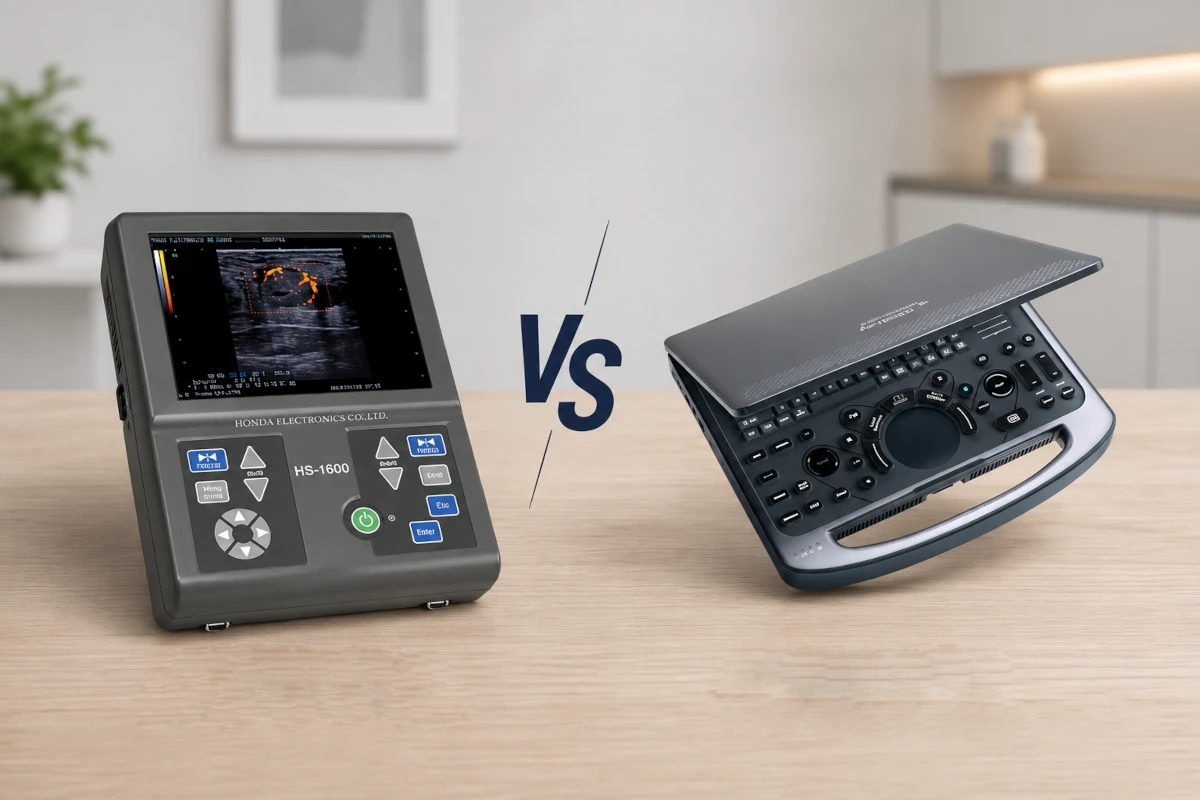
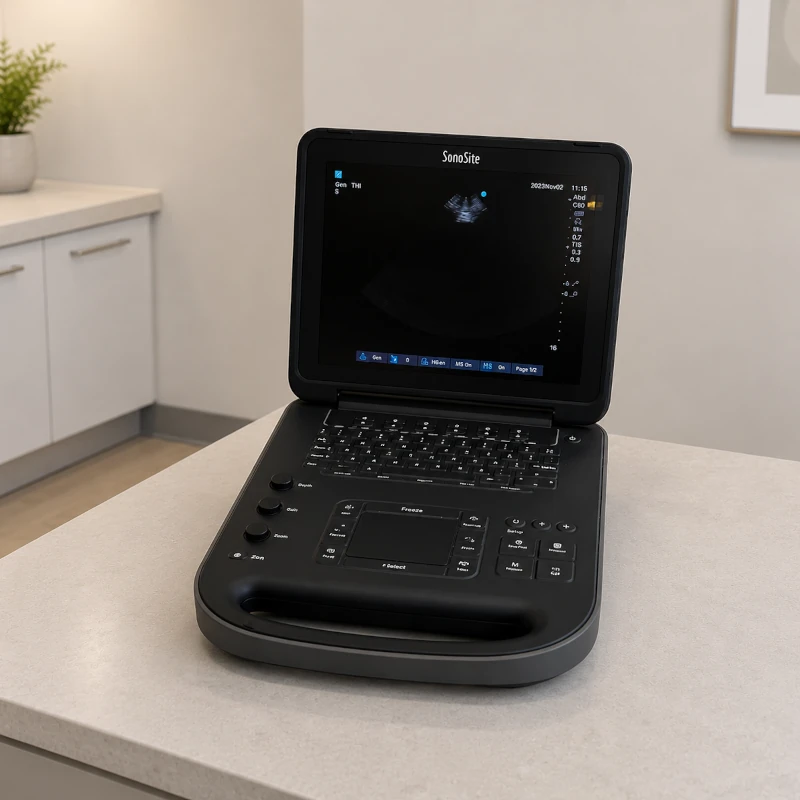
A portable equine ultrasound machine is usually better for vets who travel to barns, farms, stables, or breeding facilities. It should be light enough to carry, quick to start, easy to clean, and reliable on battery power.
A clinic-based or higher-end system may make more sense for referral hospitals, sports horse centers, or practices that perform detailed diagnostics in a controlled environment. These systems may offer better display size, ergonomics, Doppler tools, and image optimization, but they may be less practical for everyday field work.
The best equine ultrasound machine is the one that matches where the scan actually happens. A system used mostly in a stable should be judged differently from one used in a dedicated imaging room.
What Equine Vets Should Review Before Buying
Before buying an equine ultrasound machine, ask:
- Will the machine be used mostly in the field or clinic?
- Which exams will be performed most often?
- Are the right equine probes included?
- How long does the battery hold charge?
- Is the screen visible in bright barns or outdoor light?
- Is the system easy to clean between calls?
- Are probe cables durable enough for field use?
- Are test images available?
- Is service support available?
- Are replacement probes and parts easy to source?
These questions help separate a system that looks good on paper from one that will actually work in daily equine practice.
Where Higher-End Equine Ultrasound Is Worth It
Not every equine vet needs a premium ultrasound machine. However, a higher-end system may be worth considering for sports horse medicine, tendon and ligament follow-up, referral imaging, advanced reproductive work, guided procedures, Doppler-based assessments, high-volume equine scanning, or clinics that need stronger documentation and image storage.
A high-end system is only worth the cost if the practice will use the features regularly. For occasional reproductive checks, a simpler portable machine may be enough. For advanced sports horse diagnostics or referral imaging, better image detail, Doppler, display quality, and reporting tools may justify the investment.
Buying Used or Refurbished Equine Ultrasound Machines
Used and refurbished ultrasound machines can be a smart option for equine vets, especially when the system is properly tested and includes the right probes. This can allow a practice to access better imaging capability at a lower upfront cost.
Buyers should check the exact model and age, included probe types, probe cable and lens condition, battery health, screen condition, Doppler features if needed, test images, service history, warranty or return option, and replacement probe availability.
For equine vets, battery health and probe condition are especially important because field use can be hard on equipment. A low-cost system may not be a good value if the battery fails quickly or the probe needs repair soon after purchase.
Common Mistakes Equine Vets Should Avoid
One common mistake is buying a machine before choosing the probe package. The system may be portable and affordable, but it will not be useful if it cannot support reproductive, tendon, or general equine exams.
Other mistakes include choosing only by brand name, buying the lightest system without checking image quality, ignoring battery condition, assuming every portable unit is field-ready, forgetting screen visibility in barns or sunlight, buying without test images, choosing a small animal system that does not fit equine workflow, and ignoring service or replacement probe availability.
The right purchase should match the species, exam type, work environment, and support needs of the practice.
Final Buying Advice
The best equine ultrasound machine depends on the vet’s real workflow. A reproduction-focused field vet may need a rugged portable system with strong battery life and a rectal probe, while a sports horse or referral practice may need better image detail, linear probe performance, Doppler, and documentation tools.
The best equine ultrasound machine is the one that fits your daily scanning environment, supports the right probes, produces reliable images, and can be serviced when your practice depends on it.
FAQ
What is the best ultrasound machine for equine vets?
There is no single best machine for every equine vet. The best choice depends on whether the system will be used for reproduction, tendon exams, field calls, sports horse diagnostics, or clinic-based imaging.
What probes do equine vets need?
Many equine vets need a rectal probe for reproductive work and a high-frequency linear probe for tendon, ligament, and superficial soft tissue exams. Some practices may also need convex or Doppler-capable probes.
Is portable ultrasound good for equine practice?
Yes, portable ultrasound is often very useful for equine practice because many horses are scanned in barns, farms, stables, and breeding facilities. Battery life, durability, screen visibility, and probe quality are important.
Which brands make equine ultrasound machines?
Common brands considered by equine vets include Draminski, IMV Imaging, Esaote, Mindray, and selected systems from other medical imaging brands depending on the use case and supplier support.
Is Draminski good for equine ultrasound?
Draminski may be a strong option for equine ultrasound, especially for portable and field-focused use. The brand highlights equine applications including reproductive work, Ovum Pick-Up procedures, and tendon diagnostics.
Is Mindray suitable for equine vets?
Mindray may be suitable for equine or mixed-practice vets depending on the model and probes. Mindray lists Vetus EQ as focused on equine ultrasound diagnosis needs, with presets for different application scenarios.
Should equine vets buy used ultrasound equipment?
Used or refurbished equipment can be worth buying if the machine, probes, battery, screen, and software have been tested. Warranty, service support, and replacement probe availability should also be checked.