
Summary
Farm animal ultrasound machines are mainly used for pregnancy diagnosis, reproductive management, fertility work, and selected health evaluations in livestock. Buyers should compare portability, battery life, probe options, durability, image quality, ease of cleaning, service support, and whether the system is practical for daily field use.
Introduction
Farm animal ultrasound is different from standard clinic-based imaging. The machine often needs to work in barns, chutes, pens, farms, and outdoor environments where space, light, weather, animal movement, and speed all matter.
Farm-focused ultrasound systems are commonly used for cattle, sheep, goats, pigs, alpacas, llamas, and other livestock. For farm vets and producers, the goal is not always to buy the most advanced ultrasound system available. It is to choose a machine that can handle daily livestock work without slowing down the workflow.
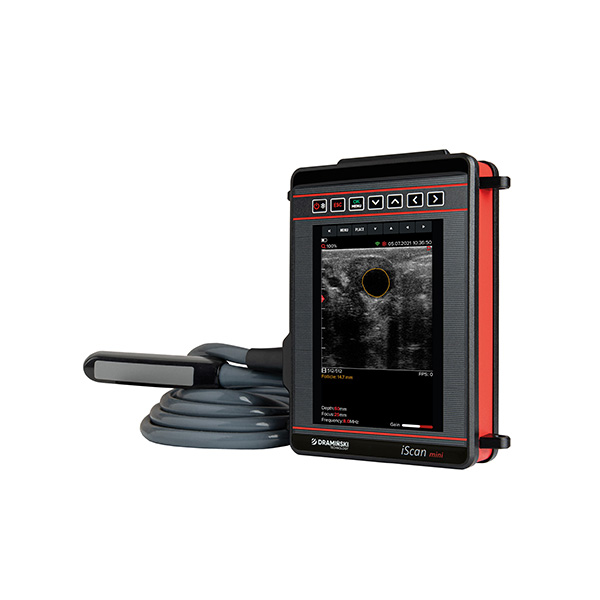
Brands such as IMV Imaging, Draminski, Mindray, and Honda are often considered for farm or livestock ultrasound. IMV Imaging says it has farm ultrasound systems and tools for livestock scanning, including app-based image viewing and measurement features. Draminski describes its veterinary scanners as suitable for clinic and field use, including bovine and livestock ultrasound, reproduction monitoring, internal organ exams, and equine applications.
Quick Buyer Verdict: What Matters Most on a Farm
For farm animal vets, the best ultrasound machine is usually the one that is fast, portable, durable, easy to clean, and paired with the right probe. High-end imaging features can be useful, but they matter less if the machine is awkward to carry, hard to see outdoors, slow to start, or unreliable during long scanning days.
The most important factors are battery life, probe durability, fast setup, screen or goggle visibility, reproductive probe options, easy cleaning between animals, good image quality for pregnancy and reproductive exams, and access to service support or replacement probes.
For farm use, the best ultrasound machine is not only the one with the clearest image. It is the one that keeps working when the environment is messy, busy, and unpredictable.
Start With the Farm Work You Actually Do
Pregnancy Diagnosis and Herd Planning
Pregnancy checks are one of the most common reasons farm vets and livestock producers use ultrasound. The right system can support breeding decisions, feeding plans, calving, lambing, kidding preparation, and herd management.
Speed matters because vets may scan many animals in one visit. A system that takes too long to set up or is difficult to view in a chute can slow down the entire workflow.
Reproductive and Fertility Management
Farm ultrasound may also support ovarian structure evaluation, uterine checks, fertility work, and breeding management. Mindray notes that its portable ultrasound systems can be equipped with special convex and endocavity transducers to support livestock breeding and fertility management.
For this type of work, probe choice is critical. A machine may have good general imaging quality, but it still needs the correct reproductive probe for the species and scanning method.
Field Diagnostics Beyond Pregnancy
Ultrasound may also be used for selected internal organ checks, udder or soft tissue concerns, fluid evaluation, and other farm animal diagnostic needs depending on the veterinarian’s training and probe setup.
It should be viewed as part of the diagnostic process, not a replacement for a full veterinary exam, lab work, or other imaging when those are needed.
Portable, Wearable, or Clinic-Style: Which Setup Fits Best?
Handheld and Wearable Farm Scanners
Handheld and wearable scanners are often useful for high-volume reproductive scanning because they are light, quick to move with, and practical in chutes or tight farm environments.
Some systems use goggles, a small display, or a connected app or device. IMV Imaging’s farm ultrasound content mentions its Go:scan app, which allows users to view images, adjust machine settings, calculate foetal age, measure back fat, and upload animal data.
Laptop-Style Portable Systems
Laptop-style portable systems may suit mixed-practice vets who need farm use but also want a more familiar screen-based setup. They may offer a larger display and broader imaging capability than a wearable scanner.
The trade-off is convenience. A laptop-style system may be less practical during high-volume chute-side scanning, especially when the vet needs to move quickly between animals.
Cart-Based or Clinic Systems
Cart-based systems are usually not the first choice for daily farm work. However, they may make sense for mixed clinics, referral settings, or practices that also perform small animal or equine diagnostics in a controlled environment.
For routine livestock reproductive work, portability and durability usually matter more than cart-based ergonomics.
The Probe Package Is the Real Purchase
The ultrasound machine itself matters, but the probe determines what the buyer can actually scan. A low-cost system without the right livestock probe can be a poor investment.
Farm animal buyers may need transrectal probes for cattle reproductive exams, convex probes for abdominal and reproductive imaging, linear probes for superficial structures or selected livestock exams, endocavity probes for reproductive work, sector or specialty probes depending on species and use, and Doppler-capable probes if blood flow or advanced reproductive assessment is needed.
Before buying, confirm probe compatibility, condition, cable wear, lens quality, connector condition, and replacement cost. Probe repairs or replacements can change the real price of a used system quickly.
Brands Farm Animal Buyers Often Compare
IMV Imaging may be a strong fit for farm animal buyers because it has a dedicated farm ultrasound focus and offers scanners for farm, equine, and small animal markets. Its farm ultrasound content also highlights practical tools such as app-based viewing, foetal age calculation, back fat measurement, and animal data upload.
Draminski iScan 3 may suit vets who need portable livestock and field ultrasound. The iScan 3 is described as designed primarily for livestock diagnostics, and Draminski notes that Color Doppler can help diagnose corpus luteum activity 18–20 days after insemination.
Mindray veterinary ultrasound systems may be relevant for mixed practices or buyers wanting portable and cart-based veterinary options with livestock breeding and fertility probe support. Mindray’s farm animal content mentions special convex and endocavity transducers for breeding and fertility management.
Honda veterinary ultrasound systems may be considered by buyers looking at portable veterinary ultrasound systems for livestock or reproductive work, especially on the used or refurbished market. Honda Electronics lists veterinary ultrasound imaging devices and probes, including systems such as the HS-1600V.
Review the Machine Like a Field Tool, Not Just an Imaging System
A farm animal ultrasound machine should be judged by how it performs during a real scanning day.
Can it handle dust, dirt, moisture, and repeated transport? Is it light enough to carry comfortably? Can the screen be seen in barns or bright outdoor light? Can the battery last through the expected workload? Are the controls usable with gloves or one-handed operation? Is the probe cable durable enough for farm conditions? Is it easy to clean and disinfect? Can images or data be saved quickly? Is support available if the machine fails during the busy season?
These questions are just as important as technical image specifications.
When Advanced Features Are Worth Paying For
Not every farm animal buyer needs the most advanced system, but some features may be worth the cost. Doppler can matter for selected reproductive or vascular assessments. Foetal age calculations, back fat measurements, image storage, reporting, wireless viewing, long scanning sessions, multiple species presets, and training support may also be useful.
Advanced features are most valuable when they support daily decisions. They are less useful if the buyer only needs basic pregnancy checks and will rarely use the extra tools.
New, Used, or Refurbished Farm Animal Ultrasound?
Farm animal ultrasound machines are available new, used, and refurbished. New systems usually offer the latest features, current warranty, and easier support. Used systems can reduce upfront cost, but they need careful inspection. Refurbished systems may offer a better balance if the machine and probes have been properly tested.
Farm-use buyers should pay extra attention to battery health, probe cable wear, lens condition, housing damage, screen condition, chargers, accessories, software features, service history, warranty, and return policy.
Field use can be hard on ultrasound equipment. A cheap machine is not a bargain if the battery is weak, the probe cable is damaged, or replacement parts are difficult to source.
Common Buying Mistakes to Avoid
Common mistakes include buying a machine before choosing the right probe, choosing only by price, assuming every portable system is farm-ready, ignoring battery life, forgetting screen visibility outdoors, buying a used system without test images, and not checking probe repair or replacement cost.
Buyers should also avoid overpaying for advanced features they will rarely use, buying a clinic-style system for high-volume chute work, or ignoring service support before breeding season.
Final Buying Advice
The best farm animal ultrasound machine depends on species, workload, scanning environment, and the main reason for scanning. A dairy vet doing high-volume pregnancy checks may need a different setup from a mixed-practice clinic that scans cattle, goats, sheep, alpacas, and companion animals.
The right farm animal ultrasound machine should be portable, durable, easy to clean, compatible with the right probes, and reliable enough for the realities of daily livestock work.
FAQ
What is a farm animal ultrasound machine used for?
A farm animal ultrasound machine is commonly used for pregnancy diagnosis, reproductive management, fertility checks, fetal monitoring, selected organ exams, soft tissue concerns, and herd health decisions.
What animals can be scanned with farm ultrasound?
Farm ultrasound may be used for cattle, sheep, goats, pigs, alpacas, llamas, and other livestock. The right machine and probe depend on the species and exam type.
What probe is best for cattle pregnancy checks?
Transrectal and endocavity-style probes are commonly used for cattle reproductive exams. The best option depends on the system, scanning method, veterinarian preference, and herd workflow.
Is a portable ultrasound machine best for farm use?
In many cases, yes. Portable, handheld, or wearable ultrasound systems are often more practical for farm work because they are easier to carry, set up, clean, and use in chutes, barns, and outdoor environments.
Which brands make farm animal ultrasound machines?
Brands often considered for farm animal ultrasound include IMV Imaging, Draminski, Mindray, Honda, and other veterinary ultrasound manufacturers. The best choice depends on species, probes, support, and budget.
Should I buy a used farm animal ultrasound machine?
A used farm animal ultrasound machine can be worth buying if the system, probes, battery, image quality, accessories, and software have been tested. Warranty and support are important because farm use can be hard on equipment.
What should I check before buying livestock ultrasound equipment?
Check the exact model, included probes, probe condition, battery life, screen visibility, image quality, cleaning requirements, service history, warranty, and availability of replacement parts or probes.